Meet Havva Özgen Eyüpoğlu: FEBS Junior Section members' interview series

Our interviewee is Havva Özgen Eyüpoğlu, a PhD student from the Department of Medical Biology and Genetics at Marmara University, Türkiye, and a Research Assistant at Sygehus Lillebaelt Hospital, Vejle, Denmark. Havva is one of the founding members of the Junior Section of the Turkish Biochemical Society (TBS), FEBS Constituent Society.
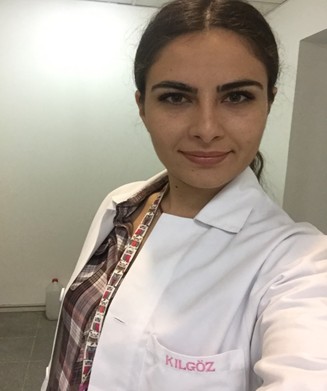
Havva Özgen Eyüpoğlu. Photo credits: personal archive
What motivated you to pursue a career in science? Why did you choose this field?
My interest in science actually started in high school. I was deeply impressed by a book by Gülten Dayıoğlu called “Mo’nun Gizemi” (in English: ‘’The mystery of Mo’’). It was the first time I really started thinking about how the human body works, what makes each person unique, and how much of that is hidden in our cells. That book triggered a lot of questions in my mind and made me curious about biology at a deeper level. Furthermore, I loved and admired all my science and biology teachers, and I especially enjoyed the practical sessions in our science classes.
Briefly introduce your research topic. What is the purpose of your research?
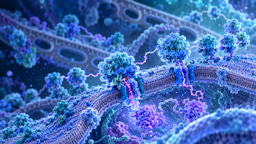
My research focuses on extracellular vesicles in pancreatic ductal adenocarcinoma (PDAC). I study how tumor-derived vesicles influence the immune system and the tumor microenvironment, and how we can exploit them as vehicles or targets for therapy. The overall aim is to develop a new immunotherapeutic approach that can improve treatment response and outcomes for patients with PDAC.
What excites you most about your work or research?
It is the possibility of using smart, natural nanovesicles to overcome some of the major limitations of current cancer treatments. Extracellular vesicles are biocompatible and can “hide in plain sight” in the body, which means they have the potential to deliver drugs or immune-modulating signals without being rapidly cleared or causing strong side effects.
In pancreatic cancer, where conventional therapies often fail, the idea that we could use these vesicles to re-educate the immune system or deliver treatment more precisely is very motivating for me.
Among all the scientific discoveries of all time, which is your favorite? Why?
I believe scientific discoveries are usually shaped by the combination of curiosity and creativity... If I had to choose one favorite, it would be the discovery of the structure of DNA and the realization that genetic information is encoded in this molecule.
I like it for two reasons. First, it completely changed how we think about life and disease – it turned biology into something we can understand and manipulate at the molecular level, which is the basis of fields like molecular genetics, cancer genomics, and immunotherapy. Second, it’s a great example of creative science: combining physics, chemistry, and biology, to “see” something that no one had seen before.
This discovery also resonates with my own work, because I’m interested in how molecular information is packaged and communicated between cells, for example, via extracellular vesicles. In a way, it’s the same fascination: how information at the smallest scale can shape the behavior of whole tissues and diseases.
What do you do as a scientist to make your work interesting and accessible to the public?
I see communication as part of my job as a scientist, not something separate from it. I try to connect my research to everyday life and health. When I talk about pancreatic cancer or the immune system, I relate it to things people already know – such as inflammation, infections, or how the body defends itself – so it doesn’t feel distant or abstract. I use clear visuals and structured explanations in my talks and classes. I teach students and often give presentations where I break complex figures into simple steps and add short, plain-language summaries. Overall, I try to show why the question is important before I talk about how I study it. That way, people with no scientific background or no field-related knowledge can still follow the main idea and feel engaged.
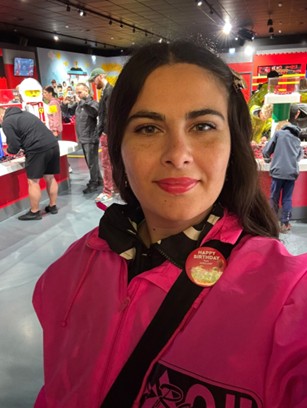
Havva Özgen Eyüpoğlu at Legoland Billund, Denmark
(July 7th, 2025). Photo credits: personal archive
What do you like to do in your spare time? Do you have hobbies?
I like knitting and doing small handcrafts or painting. I also enjoy listening to music, going for walks, and practicing yoga. These activities help me clear my mind, reduce stress, and come back to my work with more focus and energy.
How did you learn about the FEBS Junior Section? What motivated you to become a member?
I first learned about the FEBS Junior Section during the FEBS Congress in Tours, France. There was a Junior Section stand with several interactive and fun activities for young scientists, and I joined some of them. I really liked the atmosphere – it was welcoming, dynamic, and focused on supporting early-career researchers.
That experience motivated me to become a member because I felt it was a great platform to connect with other young scientists, share experiences, and develop not only scientifically, but also in communication, teamwork, and leadership. I was especially interested in contributing actively, not just participating, and that’s why I later joined the efforts to help establish a National Junior Section in Türkiye as well.
How the idea of your National Junior Section was born? Tell us the story of the initiative.
The idea of our National Junior Section was born quite naturally. I was attending the FEBS Congress in Tours, France, where there was a Junior Section stand with many fun and engaging activities for young scientists. I joined some of these activities and really enjoyed the energy and sense of community there. After that, I told them that I was very interested and would like to take an active role. Shortly afterwards, the Junior Section coordinator, Alex Röntgen, contacted me and explained that there were also other young scientists from Türkiye who were interested in starting a Junior Section. I was very excited about this, so I contacted them and joined the very first WhatsApp group created by the other founding members. That was where we started discussing ideas, planning, and shaping the first steps of what later became our National Junior Section of the Turkish Biochemical Society.
What is the importance of getting involved in FEBS JS activities for students and young scientists?
Getting involved in FEBS Junior Section activities is very important for students and young scientists because it offers something that formal education often does not: community, visibility, and practical experience. It allows young researchers to connect with peers from different countries, exchange ideas, and feel part of a supportive network rather than isolated in their own lab or institution. Through seminars, workshops, and collaborative events, they can learn about different career paths, improve their communication skills, and gain confidence in presenting their work. For those who take an active role in organising activities, it is also a unique chance to develop leadership, teamwork, and project management skills in a safe and encouraging environment.
Overall, FEBS JS activities help young scientists grow not only scientifically, but also personally and professionally, and this can make a real difference in how they navigate the early stages of their career.
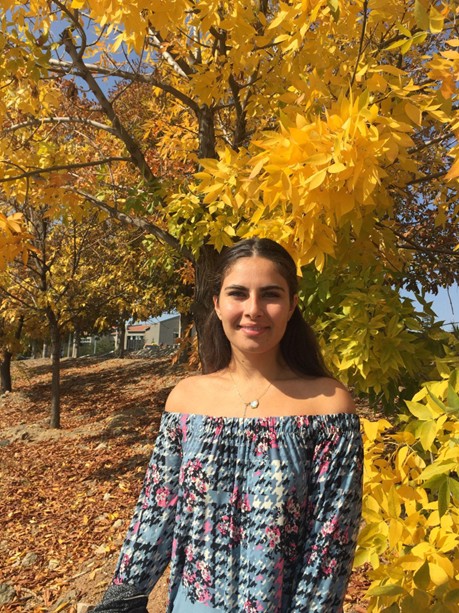
Havva Özgen Eyüpoğlu. Photo credits: personal archive
What advice would you give to aspiring students/scientists?
My advice to aspiring students and scientists would be: stay curious, be patient, and don’t do it alone. First, follow your curiosity rather than what looks fashionable from the outside. If a question genuinely fascinates you, it will carry you through the difficult parts. Second, accept that science is slow and full of failure. Experiments and applications don’t always work, and that’s normal. Try to see “negative” results as information, not as a personal failure. Third, invest in people and community. Find mentors you can trust, ask questions, collaborate, and get involved in networks like the FEBS Junior Section. Science is much easier and more enjoyable when you have support. Finally, take care of yourself outside the lab—your health, hobbies, and relationships. A sustainable scientific career is a marathon, not a sprint.
Where do you see your career going next?
Post-doc may be. I am looking forward to the next chapter of my career in the near future.
Photo by Cole Marshall on Unsplash.