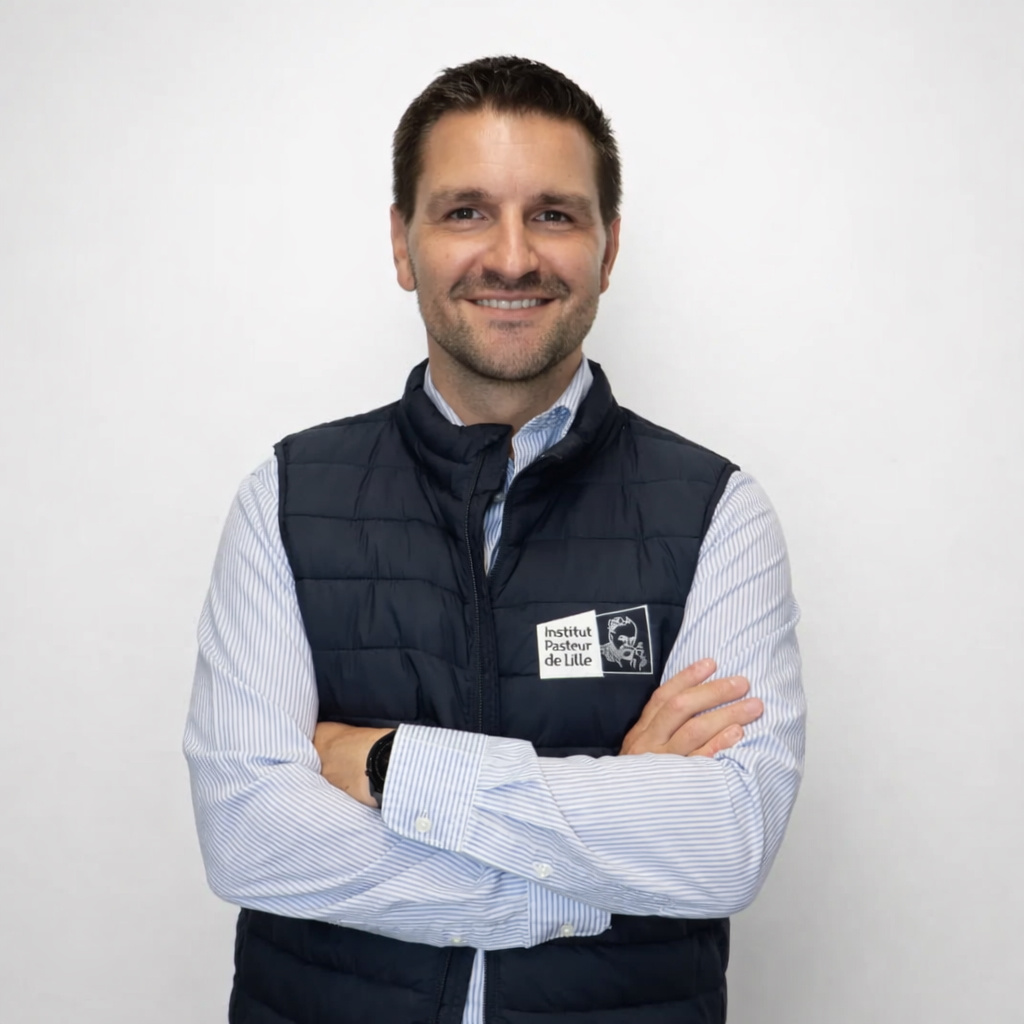
FEBS Junior Section presents Sébastien Bontemps-Gallo

You can watch the online webinar here.
This talk is an activity from the FEBS Junior Section, an initiative set up by students and young researchers from some of the FEBS Constituent Societies. Each month members of the FEBS Junior Section organize an online event on either a research or a career topic. This talk was coordinated by the junior section of the French Society for Biochemistry and Molecular Biology (SFBBM)
- Speaker’s name and affiliation: Dr. Sébastien Bontemps-Gallo, Center for Infection and Immunity of Lille (CIIL), Institut Pasteur of Lille, Lille, France
- Title: From PhD to CNRS Research Associate: My Journey in Science, Publishing, Public Engagement, and the Daily Life of a Scientist
- Date/Time (CET) of the talk: March 12th 2026, 19:00 CET
Participants will have the opportunity to stay for an after-talk hangout to have an informal chat with the speaker, members of the FEBS Junior Section, and other participants.
Abstract
What does it take to build a career in research today? In this career-oriented talk, I will share my journey as a CNRS researcher, from PhD training to obtaining a tenured position, highlighting key milestones, challenges, and lessons learned along the way. Drawing on my experience in research, editorial activities, and public outreach, I will discuss how international mobility, networking, and involvement in scientific publishing have shaped my career and professional identity. I will also provide insights into how editorial work functions, what it requires, and how it can enrich a scientific career. This presentation will provide practical insights into navigating challenges and building a sustainable career in research.
Biosketch
Sébastien Bontemps-Gallo, a CNRS Research Associate, studies how pathogenic bacteria adapt to environmental stresses and how these adaptations shape virulence, with a particular focus on bacterial signaling pathways such as two-component systems. Using a multidisciplinary approach combining genetics, omics, and biochemical methods, his work examines pathogen regulatory mechanisms in situ. By leveraging multiple host–pathogen models (e.g., Yersinia pestis–flea, Dickeya dadantii–plant, Borrelia burgdorferi–tick), this work aims to uncover conserved adaptive strategies and identify novel therapeutic targets against vector-borne diseases. Currently, Sébastien is based at the Center for Infection and Immunity of Lille, located on the campus of the Institut Pasteur de Lille (France).
Sébastien began his scientific career at the Structural and Functional Glycobiology Unit (CNRS / Université de Lille), where he earned in 2013 his PhD studying the role of osmoregulated periplasmic glucans (OPGs) in the physiology and pathogenesis of the phytopathogen Dickeya dadantii. After a short position as a research assistant in the same lab, he moved to the Rocky Mountain Laboratories (NIH-NIAID, Montana, USA) for a postdoctoral fellowship (2014–2018), investigating how Borrelia burgdorferi, the agent of Lyme disease, adapts to its tick vector. Since 2018, he has been based at the Institut Pasteur de Lille, first as a Pasteur researcher and later as a tenured CNRS Research Associate (since 2019). Beyond research, Sébastien is actively involved in scientific management (CNRS GDR BPTM, CoNRS), editorial activities (PLoS Pathogens, Frontiers, Microbiology Spectrum), and public outreach. In 2025, he was recognized as one of the Pasteur Network’s “40 under 40,” highlighting outstanding early-career scientists across the Pasteur Network who have demonstrated remarkable scientific potential, leadership, and innovation.
Sébastien's research is embedded within the complementary structures of the CNRS and the Institut Pasteur de Lille. The CNRS provides a unique national framework to advance knowledge on fundamental bacterial mechanisms and host-pathogen interactions beyond disciplinary boundaries. At the same time, the Institut Pasteur de Lille, a non-profit foundation founded in 1894, brings together research, public health, and innovation with the shared goal of improving global health. This environment enables a direct link between fundamental discoveries and their application to infectious diseases. Within this structure, the Plague and Yersinia pestis team led by Dr. Florent Sebbane is the only group in Europe equipped with the full infrastructure required to study the complete infectious cycle of plague, offering a strong example of how integrated institutional frameworks can support ambitious research and help develop scientific careers.
.png)
The FEBS Junior Section
Want to join this platform for young European life scientists? Learn more about our initiative, check out the Room for the FEBS Junior Section and – if you do not have a junior section yet – read this post about how to set one up!