FEBS Junior Section presents Simeon Minić
You can view the talk here.
This talk is an activity from the FEBS Junior Section, an initiative set up by students and young researchers from some of the FEBS Constituent Societies. Each month members of the FEBS Junior Section organize an online event on either a research or a career topic. This talk is coordinated by the junior section of the Serbian Biochemical Society (SBS).
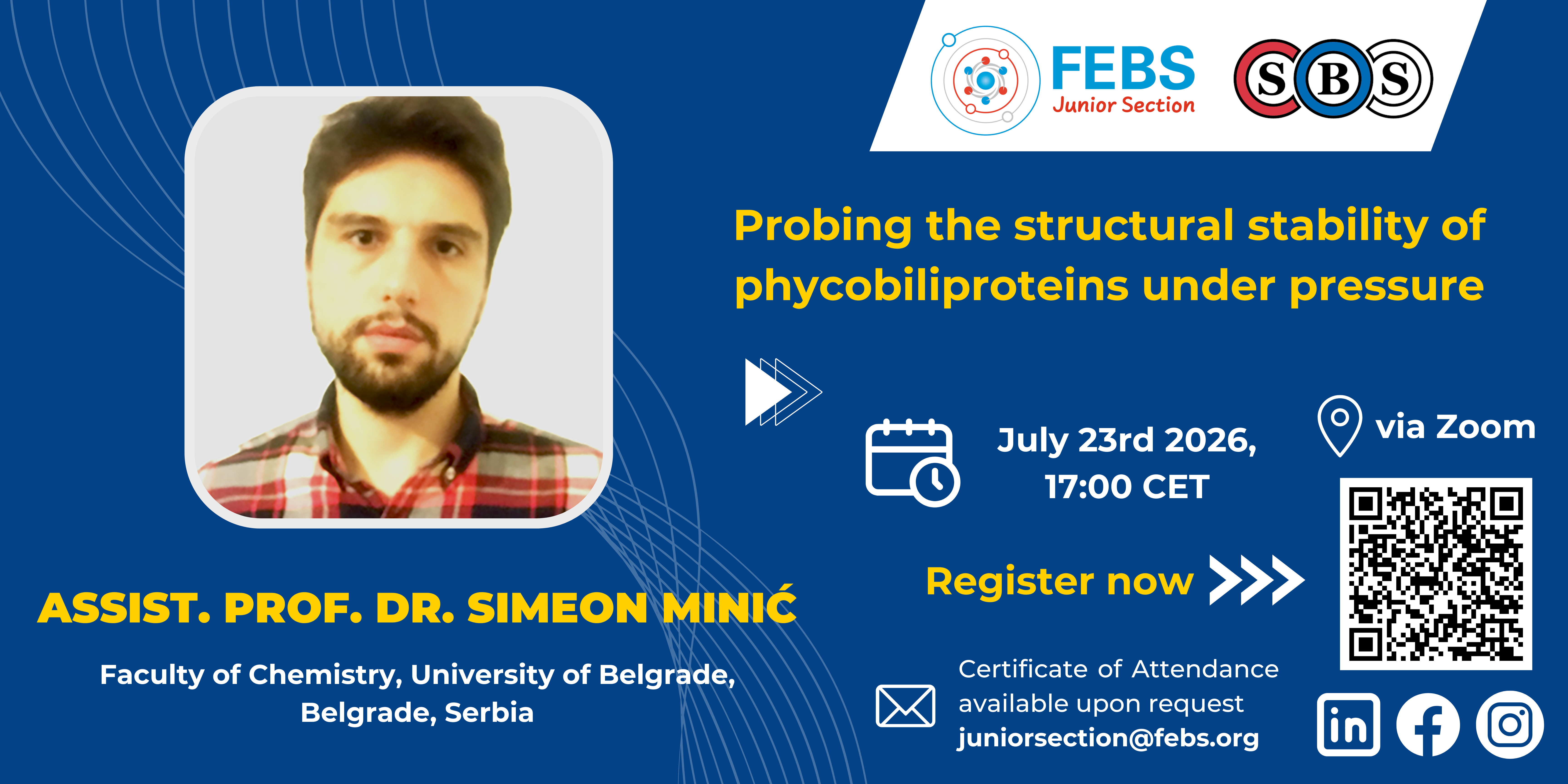
- Speaker’s name and affiliation: Assist. Prof. Dr. Simeon Minić, Faculty of Chemistry, University of Belgrade, Belgrade, Serbia
- Title: Probing the structural stability of phycobiliproteins under pressure
- Date/Time (CET) of the talk: July 23rd 2026, 17:00 CET
-
Link to register:
https://us06web.zoom.us/webinar/register/WN_ImOwcpEYStW57aYH0_7Mpg

Participants will have the opportunity to stay for an after-talk hangout to have an informal chat with the speaker, members of the FEBS Junior Section, and other participants.
Abstract
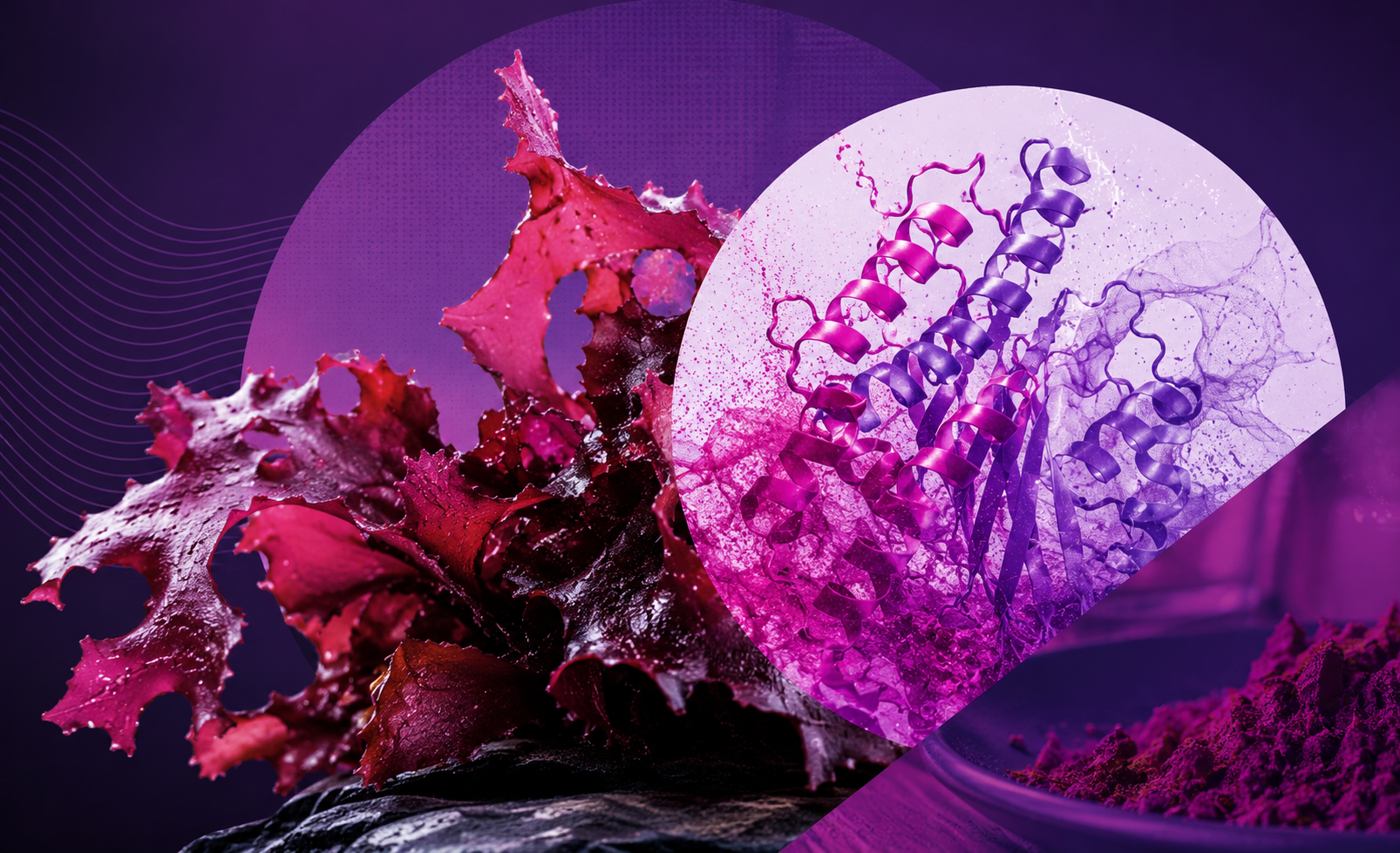
High pressure (HP) is a particularly powerful approach for investigating the mechanisms of protein folding and unfolding. HP offers several advantages for the food industry, including lower energy consumption, improved preservation of nutritional quality, and better retention of the natural colour and flavour of food products. In his research, Dr. Minić combines in situ HP experiments with complementary analytical techniques, like SAXS/SANS, UV-Vis absorption and fluorescence spectroscopy, to characterize proteins of interest to the food industry. He will illustrate this approach through an HP-SAXS study of R-phycocyanin (R-PC), a phycobiliprotein from red macroalgae Porphyra. Since R-PC's limited thermal stability necessitates alternative processing methods to preserve its colour and bioactive properties, he will show how in comparison to conventional thermal treatments, HP preserved both the vibrant purple colour and bioactive properties of R-PC.
Biosketch
Dr. Simeon Minić is an Assistant Professor at the Faculty of Chemistry, University of Belgrade, whose research focuses on understanding the structural behaviour of proteins under high hydrostatic pressure, with particular emphasis on phycobiliproteins from cyanobacteria and red algae. His research bridges fundamental protein biophysics with applications in sustainable food technologies, including natural food colourants, alternative proteins, bioactive chromopeptides, and cultivated meat. He leads several internationally funded projects, and actively collaborates with leading research groups in high-pressure structural biology and food science.
The FEBS Junior Section is organised by students and young researchers from some FEBS Constituent Societies. They develop joint activities, such as online talks and other events, and share resources, as well as open doors for young European scientists to opportunities outside their home countries by providing the relevant contacts and fostering communication within the network.