What drew you to your research field?
Perhaps I should admit that I never intended a research career. Rather I was interested in the kidney and kidney physiology as part of my training to be a clinical nephrologist. This led to a fascination with the renal circulation and how that might relate to the kidney’s ability to sense blood oxygen availability and regulate erythropoietin production to responses to changes in haematocrit, but not blood flow. We never solved that problem, but it led to an interest in the molecular mechanism of oxygen sensing, which, at least in a biochemical sense, we did solve.
What are some of the challenges in your research area right now?
What we found was a biochemical reaction (prolyl hydroxylation of a transcription factor) that is highly oxygen sensitive and which generates an oxygen-sensitive signal regulating transcription. What we did not find is the means by which this process is harnessed to generate the precision implicit in physiological homeostasis. How, for instance, does it cope with cells and tissues working physiologically at greatly differing oxygen concentrations? This and many other questions as to how the system operates in integrated physiology are only partially answered.
What do you see as the main ‘impacts’ of research in your field?
Basically, a piece of unforeseen biochemistry that is true and will always remain so. There’s something very satisfying about the creation of knowledge, but it’s very difficult to predict impact. A whole new field of hypoxia biology has opened up. Two new classes of drug have been developed based on this knowledge and are in use in patients. But the long-term impacts are perhaps still to come. Hopefully insights into homeostasis – the essence of life, but still largely not understood.
What aspects of your life as a researcher do you most enjoy?
Discovery. It’s addictive. So, I love discussing new data with lab members and planning new work. Of course, things rarely work out to be as we think they are. But when they do…
Should molecular biologists be interested in research beyond their own area nowadays?
Of course! They always have been and always should be. It is almost always the assembly of knowledge from different areas that brings discovery. But the sheer scale of knowledge creation is a problem. In theory, there has never been a time so opportune for discovery. But getting to the frontier of knowledge with sufficient breadth to realize that opportunity has never been more challenging. Will AI address this limitation of the human brain? I’m not so sure.
Lab webpages:
https://www.ludwig.ox.ac.uk/research/prof-sir-peter-ratcliffe-oxygen-sensing
https://www.crick.ac.uk/research/labs/peter-ratcliffe
Two recent/key papers:
Masson, N. et al. (2019) Conserved N-terminal cysteine dioxygenases transduce responses to hypoxia in animals and plants. Science 365, 65–69. https://doi.org/10.1126/science.aaw0112
Prange-Barczynska, M. et al. (2024) Hif-2α programs oxygen chemosensitivity in chromaffin cells. J. Clin. Invest. 134(18):e174661. https://doi.org/10.1172/jci174661
More information on the FEBS Sir Hans Krebs medal and plenary lecture at the 50th FEBS Congress
The Sir Hans Krebs medal is awarded annually by FEBS for outstanding achievements in Biochemistry and Molecular Biology or related sciences.
Peter Ratcliffe will be presented with the medal at the 50th FEBS Congress in Maastricht, the Netherlands on Saturday 4th July 2026 where he will deliver the FEBS Sir Hans Krebs Lecture on 'Elucidation of oxygen sensing mechanisms in human and animal cells’.
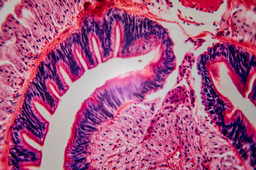
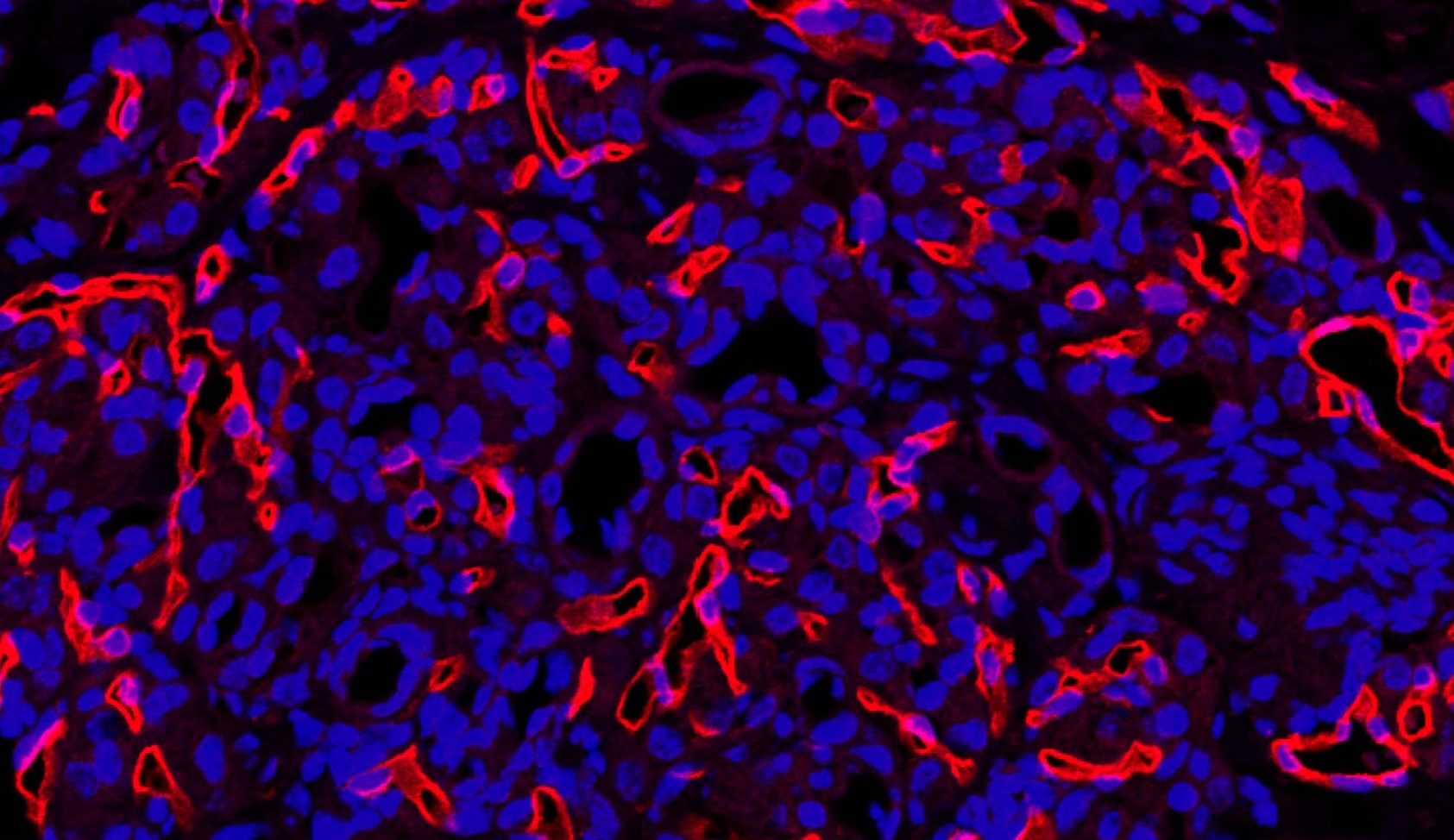
Top image of post: the carotid body, enlarged by activation of hypoxia signalling pathways (from the lab of Peter Ratcliffe).
'FEBS Communications' posts general items from the FEBS Network Team as well as news on FEBS events and other activities.