Carola Vinuesa: "I appreciate independent thinkers..."

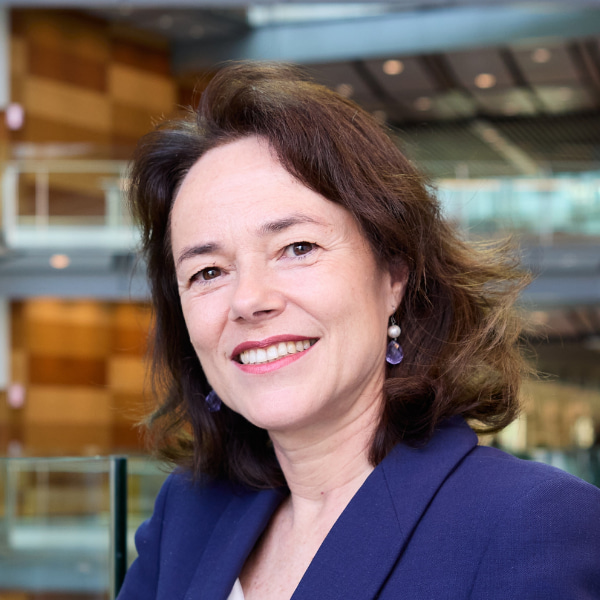
Tell us about one of your favourite published papers from your lab
One of my favorite papers from our lab is the discovery that gain-of-function mutations in TLR7 cause lupus in humans (Brown et al., Nature 2022). While increased TLR7 gene dosage had been linked to lupus-like disease in mice, this was the first direct genetic evidence in humans. The finding is significant because mutations in TLR7 – and its chaperone UNC93B1 – can reproduce the full clinical spectrum of SLE (Systemic Lupus Erythematosus), positioning this pathway as a likely central driver of disease. TLR7’s location on the X chromosome, which is incompletely inactivated in SLE patients, also offers a compelling explanation for the female predominance in lupus. This discovery led to the development of our ‘kika’ mouse model, which carries a patient-derived TLR7 variant and is now being used globally to explore key questions in lupus pathogenesis.
What’s exciting in your research area right now?
The most exciting development is the remarkable success of anti-CD19 CAR-T cell therapy in systemic autoimmune diseases like lupus, myositis, and scleroderma. These treatments are inducing deep, sustained remissions, closer to a cure than we ever imagined, and are reshaping our understanding of disease mechanisms. They highlight B cells and their antibody products as upstream drivers of type I interferon activation and broader immune dysregulation, while also challenging the belief that self-reactive plasma cells are long-lived. The implications extend far beyond these diseases, making this an exciting and transformative time for the field.
What aspects of your life as a researcher do you most enjoy?
The highlights of my day are meeting with postdocs and students – thinking together about big biological questions, looking at data, being surprised by the unexpected, and watching them grow in confidence and ambition as they challenge ideas and define their own paths. I also enjoy the opportunities to travel, connect with scientists worldwide, and stay inspired by their discoveries. Contributing to award panels that recognize outstanding researchers, and serving on advisory boards that help shape scientific strategy globally, is both a privilege and a source of motivation.
What do you look for when selecting students and staff for your research group?
I look first for curiosity, and a genuine passion for research. I especially value those who have shown resilience – whether by moving countries, juggling jobs, or caring for children – because science is full of highs and lows, and personal motivation and perseverance makes a big difference. I also seek people with a positive outlook and a kind, generous spirit. Science is a team effort, and supportive, open-minded colleagues make for both a better lab environment and stronger science. Finally, I appreciate independent thinkers – those unafraid to ask questions, challenge ideas, and bring their own perspectives to the table.
What roles in the scientific community beyond your own research group have you most enjoyed?
One of the most meaningful roles I've taken on beyond my lab was using genomics in the courtroom to help overturn the wrongful conviction of Australian Kathleen Folbigg, who was exonerated after 20 years in prison. Working alongside brilliant scientists, lawyers, and the Australian Academy of Science, we built the scientific case that led to her release. While the legal process was often challenging and emotionally taxing, it underscored the critical need for stronger collaboration between science and the justice system, and for courts to be more responsive to scientific progress.
Lab webpage:
https://www.crick.ac.uk/research/labs/carola-vinuesa
Two recent/key papers:
Shen, Q., Wang, H., Roco, J.A. et al. TCF1 and LEF1 promote B-1a cell homeostasis and regulatory function. Nature 646, 442–451 (2025).https://doi.org/10.1038/s41586-025-09421-0
Grenov A, Yoon J, Snell DM, et al., Autoantibody origins in lupus and in relapse post CAR-T therapy. bioRxiv 2025.10.20.683393; doi: https://doi.org/10.1101/2025.10.20.683393
More information on the FEBS | EMBO Women in Science Award and plenary lecture at the 50th FEBS Congress
The FEBS/EMBO Women in Science Award is a joint initiative of FEBS and EMBO to highlight the major contributions made by female scientists to life sciences research.
Carola García de Vinuesa will be presented with the award at the 50th FEBS Congress in Maastricht, the Netherlands on Monday 6th July 2026 where she will deliver the FEBS | EMBO Women in Science Award Lecture on 'Genes and cells at the heart of medical enigmas’.
Photo by Zoha Gohar on Unsplash.
'FEBS Communications' posts general items from the FEBS Network Team as well as news on FEBS events and other activities.