Ulrike Kutay: "...biological science is most insightful when conducted in diverse teams..."
What do you consider the most formative phase of your research career?
My undergraduate years were certainly the most formative phase of my career. Already then, I spent nearly every spare moment in research labs—starting at the East German Academy of Sciences in Berlin-Buch, where I later conducted my PhD studies after it had become the Max-Delbrück Center. During this period, I first fell in love with the 'bench' side of science. The hands-on nature of biochemical work and that initial spark of discovery really influenced my decision for a path as a researcher.
What do you see as the most important developments that have influenced the way you do research in the past 15 years?
Three developments were particularly transformative. First to mention is the introduction of CRISPR-Cas9 as a gene-editing tool. For our mechanistic work in mammalian cell biology, it has become an indispensable part of the toolkit for both gene inactivation and endogenous protein tagging. Second is the 'resolution revolution' in single-particle cryo-EM and cryo-tomography. In my view, seeing is believing; the high-resolution structures that are now obtainable are decisive for building accurate mechanistic models of cellular processes. Finally, there is AlphaFold, which I use almost daily. A decade ago, obtaining a reasonable structural model for a protein complex could take years of labour; today, we can generate testable predictions in minutes. I am incredibly eager to see how much this will accelerate the pace of drug discovery.
What comes first: technique or biological question?
For me, the biological question comes first, then the technology or method that enables us to find answers.
What do you consider to be the most important skills and areas of knowledge for molecular life scientists nowadays?
In the last century, many biochemists built their entire careers around studying a single protein from start to end, or mastering one specific, sophisticated method. Today, I believe that this level of specialization is no longer sufficient; one must be far more versatile.
From my perspective, for a modern molecular life scientist, computational literacy is essential. You must also be adept at interdisciplinary communication, working fluently at the intersections of chemistry, physics, and data science. Furthermore, you need the technical breadth to study molecular players across scales—from atomic structure to systemic physiology. Because of this complexity, I find that biological science is most insightful when conducted in diverse teams where different backgrounds come together to solve a problem.
Lab webpage:
https://bc.biol.ethz.ch/research/kutay.html
Two recent/key papers:
Lewis, R., Sinigiani, V., Maziak, N. et al. LBR and LAP2 mediate heterochromatin tethering to the nuclear periphery to preserve genome homeostasis. Nat Cell Biol (2026). https://doi.org/10.1038/s41556-025-01822-7
Maslennikova, D. et al. Dystonia-associated Torsins sustain CLCC1 function to promote membrane fusion of the nuclear envelope for NPC biogenesis. bioRxiv 2025.11.07.687155. https://doi.org/10.1101/2025.11.07.687155
More information on the IUBMB plenary lecture at the 50th FEBS Congress
Ulrike Kutay will give the IUBMB Lecture at the 50th FEBS Congress in Maastricht, the Netherlands on Saturday 4th July 2026 on 'The nuclear envelope – from genome organisation to nuclear pore complex biogenesis’.
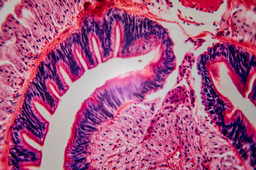
Photo by Puscas Adryan on Unsplash.
'FEBS Communications' posts general items from the FEBS Network Team as well as news on FEBS events and other activities.