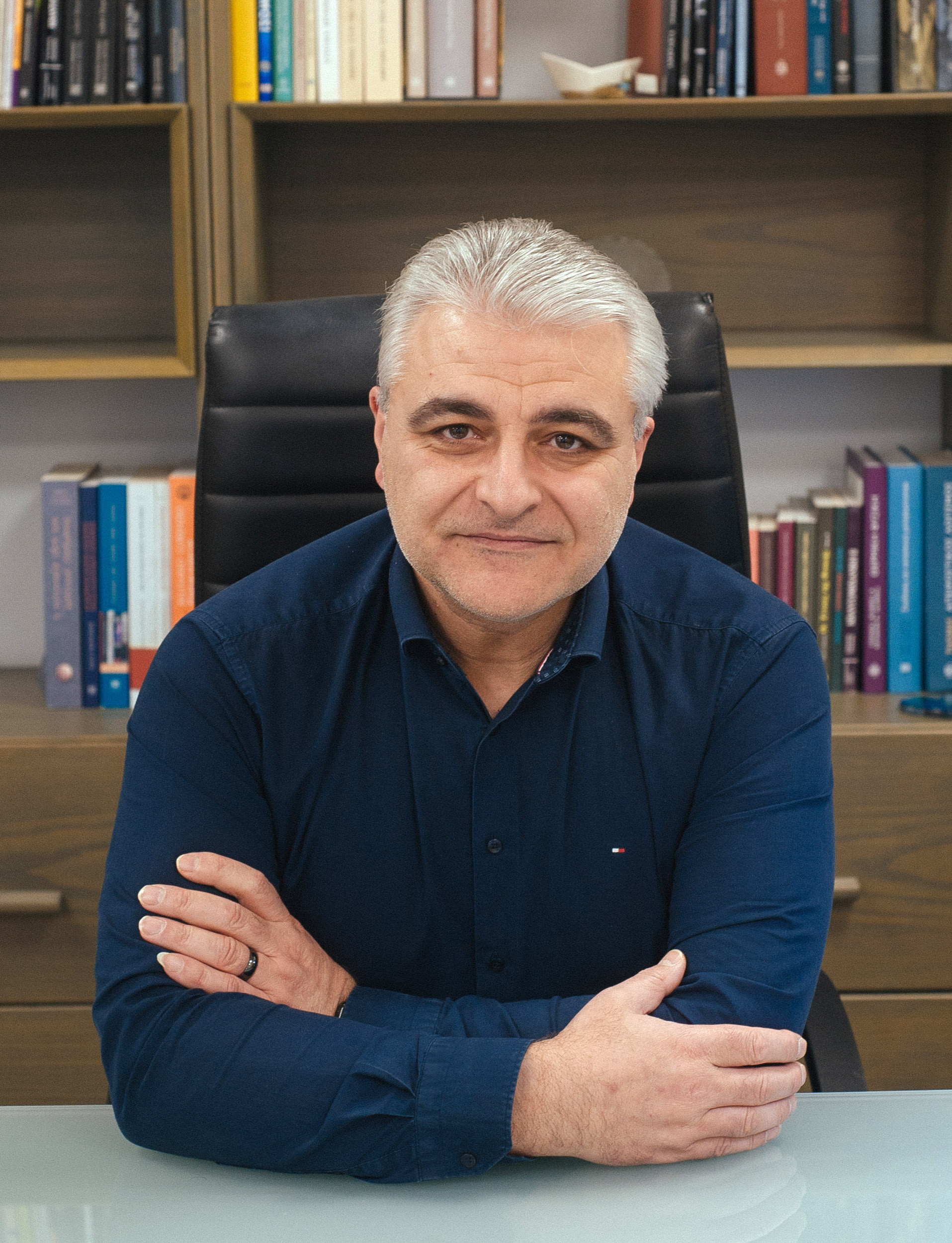
Nektarios Tavernarakis: "Molecular and cell biologists...should be actively interested in research beyond their immediate specialization..."
What drew you to your research field?
I have always been fascinated by the intricacies and the vast diversity of the living world. From an early age, I was captivated by how organisms adapt, survive, and ultimately decline over time. This curiosity naturally led me toward questions about ageing and what happens when biological systems begin to break down. As I progressed in my studies, I became increasingly drawn to the brain and neurodegeneration. Ageing is associated with a marked decrease in neuronal function and increased susceptibility to neurodegeneration. In human populations, this is manifested as an ever-increasing prevalence of devastating neurodegenerative conditions, such as Alzheimer’s and Parkinson’s disease, stroke, several ataxias, and other types of dementia. Development of therapeutic interventions against these maladies, which are a major contributor to human disability in our modern ageing societies, has thus become a pressing priority. Although age-related deterioration of the nervous system is a universal phenomenon, its cellular and molecular underpinnings nonetheless remain obscure, and progress in developing effective preventive or therapeutic interventions to combat neurodegenerative conditions has been markedly slow. Our research is motivated by these challenges and is mainly focused on the molecular mechanisms and cellular signalling pathways governing neurodegeneration and ageing. Our efforts concentrate on a fundamental question of modern ageing research: what mechanisms underlie age-related neuronal function decline? Through these studies, we aim to expand our understanding of age-related neurodegeneration, and provide critical insights with broad relevance to human health and quality of life.
What are some of the challenges in your field right now?
Recent advances in the life sciences are driven by rapid progress across multiple disciplines, including physics, chemistry, mathematics, computer science and the social sciences, increasingly blurring traditional boundaries between fields. I value this interdisciplinary approach, as it is essential for addressing complex challenges in biomedical research. A central challenge in neurodegeneration and ageing research concerns how neurons maintain long-term homeostasis. As exceptionally long-lived, post-mitotic cells, neurons depend critically on robust mitochondrial function and tightly regulated mitochondrial quality control. How neuronal metabolism and cellular homeostasis are dynamically preserved over decades remains poorly understood. Closely related are broader questions regarding the deterioration of cellular organelles, including mitochondria, the ER and the nucleus, observed both during ageing and in the context of age-related disorders. The mechanisms underlying these changes, their causal relevance to ageing, and disease pathophysiology, as well as their influence of major lifespan-regulating pathways, such as insulin/IGF1 signalling and metabolic regulation, remain unclear. Finally, a fundamental unresolved problem in biology is the contrast between somatic ageing and germline immortality. While somatic cells wither and die, the germline is an immortal cell lineage that preserves its integrity across generations. Elucidating the molecular basis of this dichotomy is also highly relevant to understanding stem cell maintenance and niche homeostasis.
Can group leaders still find time for hands-on research?
This largely depends on the career stage and other circumstances. During the first several years of running my lab, for most of the day I was doing experiments alongside students and postdocs. I believe that staying experimentally engaged – even if only at the level of pilot experiments, troubleshooting, or method development – helps maintain a direct connection to the data and the realities of laboratory work. It also sends an important signal to trainees about scientific curiosity and rigour. However, in practice, this becomes increasingly difficult when, inevitably, other commitments and obligations multiply. The administrative, managerial and strategic responsibilities of running a research group are substantial and unavoidable. Moreover, securing funding for the lab becomes an urgent priority, particularly when institutional resources are scarce or non-existent. That said, in my view, hands-on involvement should evolve; effective group leaders contribute less by generating data themselves and more by shaping questions, interpreting results, and fostering an environment where high-quality science can emerge.
What comes first: technique or biological question?
In rigorous scientific practice, the biological question always comes first. Techniques and methodologies are means to an end. In my view, sound research begins with a clearly articulated biological question or hypothesis, which then determines which techniques are appropriate, how they should be implemented, and what constitutes meaningful data. Starting with “What can I do with this method?” often leads to incremental or unfocused studies. Such work is more vulnerable to criticism for lacking biological insight, even if technically sophisticated. A project only becomes strong once a compelling biological question is defined. Besides, while clear scientific questions are always relevant, experimental techniques don’t age well, and most often become obsolete in a few years’ time. Almost none of the techniques I agonized over during my PhD and postdoc years are used anymore. That said, there are important nuances. Available technologies usually determine what questions can be realistically answered. Moreover, new techniques can enable or inspire questions that were previously unaskable. Still, even in these cases, the technique may precede the specific question, but not the scientific rationale. The biological question still emerges quickly and must ultimately justify the work.
What do you consider to be the most important skills and areas of knowledge for molecular life scientists nowadays?
The landscape of molecular life sciences has evolved dramatically, and the skills that define success in this field now extend well beyond traditional wet lab expertise. I'd argue that modern molecular life scientists need to cultivate a hybrid skill set that bridges experimental design, computational analysis and interdisciplinary collaboration. While deep mechanistic understanding of how biological systems work at the molecular level remains irreplaceable, this must now be paired with extensive computational literacy. Modern molecular biologists need familiarity with emerging AI systems and tools, Python or R programming, and the ability to analyze high-volume data from multi-omics studies. Equally important are soft skills often underappreciated in traditional training: scientific communication, project management, strategic thinking, and the interpersonal abilities needed for productive interdisciplinary collaboration. Ultimately, adaptability and continuous learning may be the indispensable meta-skills that matter most, as the tools, techniques and important questions evolve rapidly, favouring scientists who remain intellectually curious, read broadly, and aren't afraid to venture into unfamiliar territory.
Should molecular biologists and cell biologists be interested in research beyond their own area nowadays?
Molecular and cell biologists – and, indeed, more generally, life scientists – should be actively interested in research beyond their immediate specialization, and this is becoming increasingly important in contemporary life science. Modern biological problems are rarely confined to a single scale or discipline; instead, they span molecules, cells, tissues, organisms and even populations, while intersecting with physics, chemistry, engineering, computer science and medicine. As a result, intellectual isolation is no longer compatible with high-impact biological research. The complexity of biological systems demands integrative approaches. Cellular behaviour emerges from the interaction of molecular networks, mechanical forces, metabolic states and environmental cues. For example, understanding gene regulation now routinely requires familiarity with chromatin physics, imaging technologies, quantitative modelling and single-cell analytics. Without awareness of advances in these adjacent fields, researchers risk producing incomplete or outdated interpretations of their own data. Moreover, methodological innovation increasingly originates outside traditional molecular and cell biology. Researchers who monitor developments in engineering, computational biology, biophysics and data science are better positioned to adopt, adapt and extend these tools rather than merely follow established protocols. Indeed, many conceptual advances arise from analogies, frameworks or questions imported from other disciplines. While deep expertise remains indispensable, it is no longer sufficient on its own. For molecular and cell biologists today, sustained engagement with research beyond their immediate area cannot be an optional or a peripheral activity; it is, rather, becoming a professional imperative.
Basic or applied research?
As has been said, “There can be no applied research if there is no research to apply”. Indeed, applied research cannot transpire in a vacuum. It requires pre-existing raw materials, which are the findings of basic research. Basic research provides the conceptual frameworks, empirical observations, and theoretical explanations upon which practical solutions are built. Without sustained investment in fundamental inquiry, applied research risks becoming incremental, short-sighted, or technically constrained. Conversely, applied research plays a critical role in testing, refining and extending basic knowledge, often by confronting theory with real-world conditions and limitations. Rather than existing in opposition, basic and applied research form a continuous and mutually reinforcing cycle, in which advances in one domain can stimulate progress in the other. Recognizing this interdependence is essential for developing robust research ecosystems capable of generating both long-term understanding and tangible societal benefit.
What worries you about life sciences research currently?
A worrying trend in contemporary life sciences is the increasing prioritization of utilitarian/translational research over foundational understanding, often at the expense of rigorous ethical reflection. The pressure to demonstrate clinical applicability or economic value has led funding bodies and academic institutions to favour studies with predictable, marketable endpoints, potentially marginalizing exploratory or high-risk research that could yield transformative insights in the long term. While translational research and therapeutic applications are undeniably valuable, the current obsession with immediate clinical relevance and commercialization has created perverse incentives that undermine scientific rigour and marginalize fundamental discovery. Moreover, the utilitarian calculus often fails to account for the dual-use dilemmas inherent in powerful biomedical research applications and technologies. The consequences extend beyond just neglecting basic science: utilitarian pressures encourage p-hacking and publication bias, incentivize research on profitable conditions, while neglecting rare diseases and global health challenges affecting impoverished populations. What we need is not a rejection of applied research, but a rebalancing that recognizes how fundamental inquiry and ethical deliberation are not obstacles to useful science but essential prerequisites for research that truly advances human knowledge and welfare.
Lab webpage: https://www.elegans.gr/
Two recent/key papers:
Papandreou, M.-E., Konstantinidis, G. and Tavernarakis, N. (2023) Nucleophagy delays ageing and preserves germline immortality. Nature Aging 3, 34–46. https://doi.org/10.1038/s43587-022-00327-4
Palikaras, K., Lionaki, E. and Tavernarakis, N. (2015) Coordination of mitophagy and mitochondrial biogenesis during ageing in C. elegans. Nature 521, 525–528. https://doi.org/10.1038/nature14300
More information on the FEBS Datta medal and plenary lecture at the 50th FEBS Congress
The Datta medal is awarded annually by FEBS for outstanding achievements in Biochemistry and Molecular Biology or related sciences.
Nektarios Tavernarakis will be presented with the medal at the 50th FEBS Congress in Maastricht, the Netherlands on Monday 6th July 2026, where he will deliver the FEBS Datta Lecture on 'Autophagic pathways in ageing and neurodegeneration’.
'FEBS Communications' posts general items from the FEBS Network Team as well as news on FEBS events and other activities.