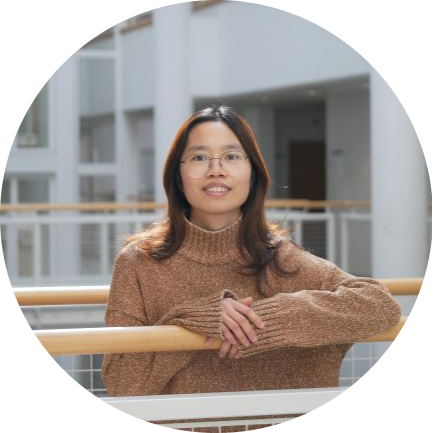
My research interests focus on the roles mitochondria play in aspects of eukaryotic life, ranging from their origin, metabolism, biogenesis and role they play in cell death pathways. These are interrogated using biochemical, molecular biology, genetic and cell biology techniques. I incorporate these interests into classes I teach to provide an understanding of practical techniques and also the current literature in the field. I studied biochemistry at the University of Leeds, with an industrial placement at Astra Charnwood, followed by a PhD at the University of Bristol, supervised by Professor Andrew Halestrap, to characterise the molecular composition of the mitochondrial permeability transition pore, with support from MitoKor. My post-doctoral training on the mitochondrial pathway of apoptosis supervised by Dr Doug Green was at the La Jolla Institute of Allergy and Immunology in San Diego, California and St Jude Children's Research Hospital in Memphis, Tennessee. I then was an associate research scientist working in the laboratory of Professor Alexander Tzagoloff at Columbia University in New York to study biogenesis of mitochondrial cytochrome c oxidase in budding yeast, Saccharomyces cerevisiae. I held independent positions as assistant professor at the New York Institute of Technology in New York and Staffordshire University in Stoke-on-Trent where I continued my research and taught subjects related to biochemistry, cell biology, genetics and molecular biology. I am now a senior lecturer in biotechnology at Liverpool John Moores University. I am a strong supporter of scientific communications and outreach to disseminate scientific developments and knowledge to a broader audience with the goal of increasing the general support of the scientific process. I also direct Biomed News, a free biomedical research literature discovery platform that uses machine learning.
👋 Hi everyone! I'm part of the FEBS Communications team and I manage FEBS Network, among other communication activities.
If you have any questions about publishing on the platform, would like feedback before posting an article, or need help with anything related to FEBS Network, feel free to reach out — I’ll be happy to help!

Our lab uses genetically modified mouse models and a combination of cell biology, molecular biology, and biochemistry techniques to study the role of altered mitochondrial dysfunction and metabolism in human diseases. A primary analytical tool of the group is metabolomics, which enables the parallel quantification of hundreds of small molecule metabolites. The team also uses computational approaches to integrate datasets from multi-dimensional analyses, including metabolomics, proteomics, and transcriptomics, with the aim to model aging-related disorders and to generate mechanistic hypotheses that will be cross validated experimentally.

Mariana Costa-Macedo
MSc Student, Life and Health Sciences Research Institute - University of Minho
Mariana Costa-Macedo is an MSc student in Biomedicine at the Life and Health Sciences Research Institute (ICVS)/School of Medicine, University of Minho. She completed her BSc in Biochemistry at the School of Sciences, University of Minho (2025), where her passion for science and biomedical research was consolidated. During her master's programme, she has expanded her expertise in oncology, genetics, immunology, and translational biomedical sciences. Throughout her academic journey, her research has focused on investigating the therapeutic potential of novel compounds in colorectal and pancreatic cancer, and more recently, on glioblastoma. These experiences have enabled her to develop strong critical thinking, problem-solving, and collaborative skills within multidisciplinary research environments.
Currently, Mariana is developing her master's thesis titled "Exploiting therapeutic vulnerabilities associated with HOXA9 and WNT6 co-expression in glioblastoma", supervised by Doctor Bruno M. Costa and Doctor Eduarda P. Martins at ICVS. This project aims to test whether a new therapeutic approach consisting of HOXA9/WNT6 dual inhibition is effective in GBM cell cultures and whether it can enhance immunotherapy efficacy.
Alongside her academic training, Mariana is actively involved in scientific outreach. She is a member of the Imaging and Outreach team of the Junior Section of the Portuguese Biochemical Society (SPB-JS) and has collaborated in the organization of ENEBIOQ'25 in Braga and the I Young Biochemist Meeting in Coimbra. Motivated by curiosity, she aspires to pursue a career in scientific research, contributing to innovative projects that bridge fundamental discoveries and clinical applications.

Balcu Antonia-Ioana
Medical Student, “Iuliu Hatieganu” University of Medicine and Pharmacy Cluj-Napoca

The FEBS Junior Section is organised by students and young researchers from some FEBS Constituent Societies. They develop joint activities, such as online talks and other events, and share resources, as well as open doors for young European scientists to opportunities outside their home countries by providing the relevant contacts and fostering communication within the network.