Polyethylene glycol: an alternative for overcoming the impediments to malaria treatment

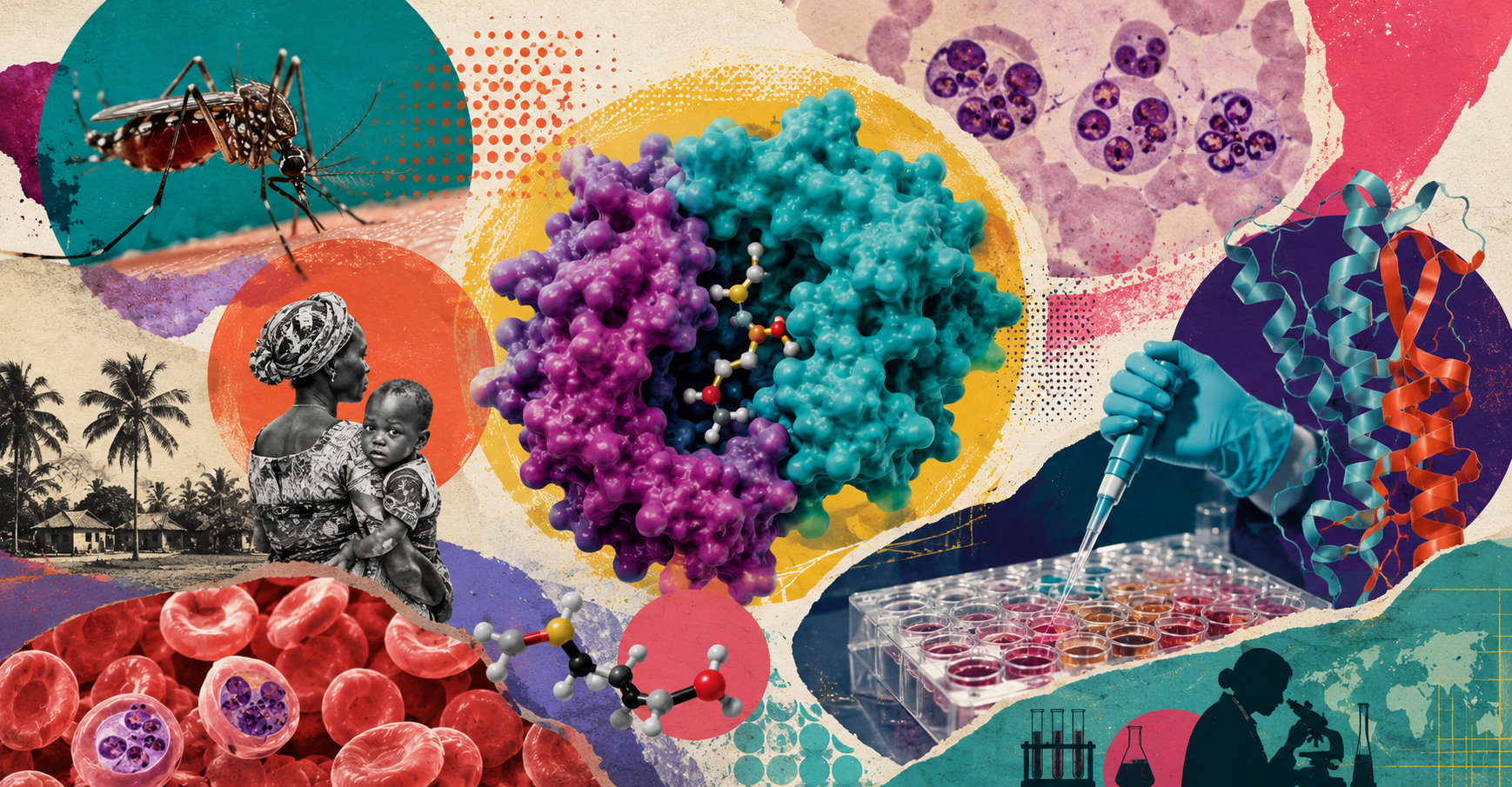
Malaria remains one of the world’s most significant health challenges despite decades of effort in prevention and treatment. It’s primarily caused by infection with Plasmodium falciparum parasite. This parasite is transmitted through infected female Anopheles mosquito bites, causing over 280 million malaria cases according to the World Health Organisation 2025 report. In 2024, more than 600,000 malaria-related deaths were recorded globally, the most vulnerable being children under the age of 5.
One target in focus is an enzyme specific to the parasite, Falcipain-2 (FP2), that is essential for parasite survival and growth within the host organism, this enzyme allows the parasite to digest human hemoglobin. Although being parasite-specific makes it an attractive target, there is a contingency, it is highly similar to a class of human enzymes called cathepsins. Therefore, a deeper understanding of FP2 binding mechanisms is of profound importance for designing selective drugs.
PEG400 regulating the FP2 activity
In their recent study published in The FEBS Journal, Nath and colleagues propose a detailed understanding of the FP2 binding mechanism to hemoglobin, and its regulation [1]. Previously, the researchers identified that polyethylene glycol (PEG) can form stable interactions with FP2. While in this study they focused on how PEG molecules bind to FP2 and its target, hemoglobin. Studying polymers of varying sizes showed that PEG400 is effective in inhibition of FP2 activity and the researchers demonstrated a unique interaction between PEG400, FP2, and hemoglobin. Using several biochemical assays, Nath et al. suggested PEG400 as a ligand to FP2. Detailed three-dimensional structural simulations allowed Nath and colleagues to bring a detailed insight into how PEG400 regulates FP2 activity.
Consequently, this study proposes an unprecedented mechanistic basis for the development of PEG derivatives exhibiting potent anti-malarial efficacy. Hopefully, continued efforts within the research community to suggest effective therapeutic strategies may reverse the grim outlook in the fight against malaria.
References
- Nath, B., Chakraborty, S. and Biswas, S. (2026), PEG400 regulates Falcipain 2 activity through an allosteric mechanism. FEBS J. https://doi.org/10.1111/febs.70546