FEBS Junior Section presents Gabriel Demo
This talk is an activity from the FEBS Junior Section, an initiative set up by students and young researchers from some of the FEBS Constituent Societies. Each month members of the FEBS Junior Section organize an online event on either a research or a career topic. This talk is coordinated by the junior section of the Czech Society for Biochemistry and Molecular Biology (CSBMB).
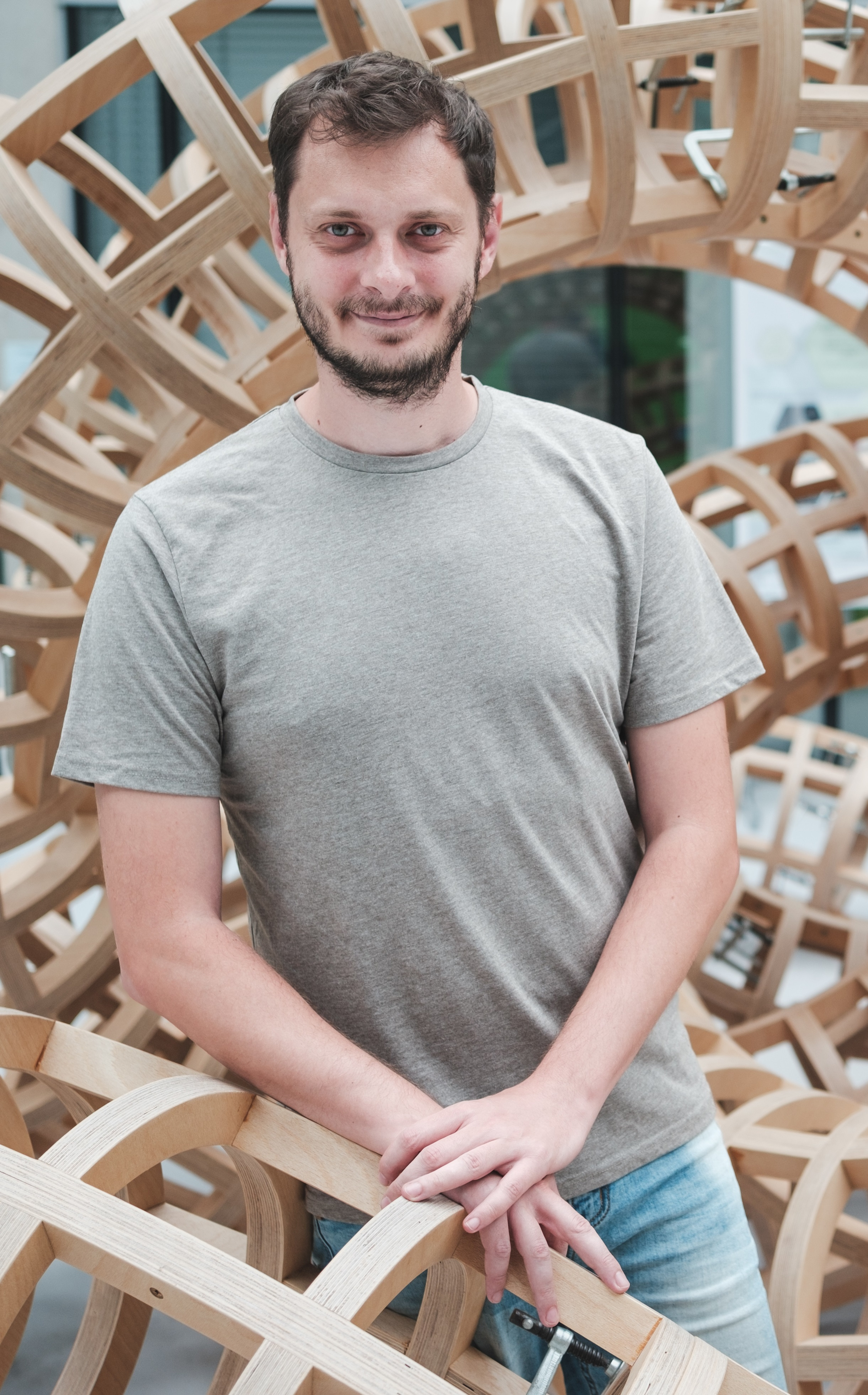
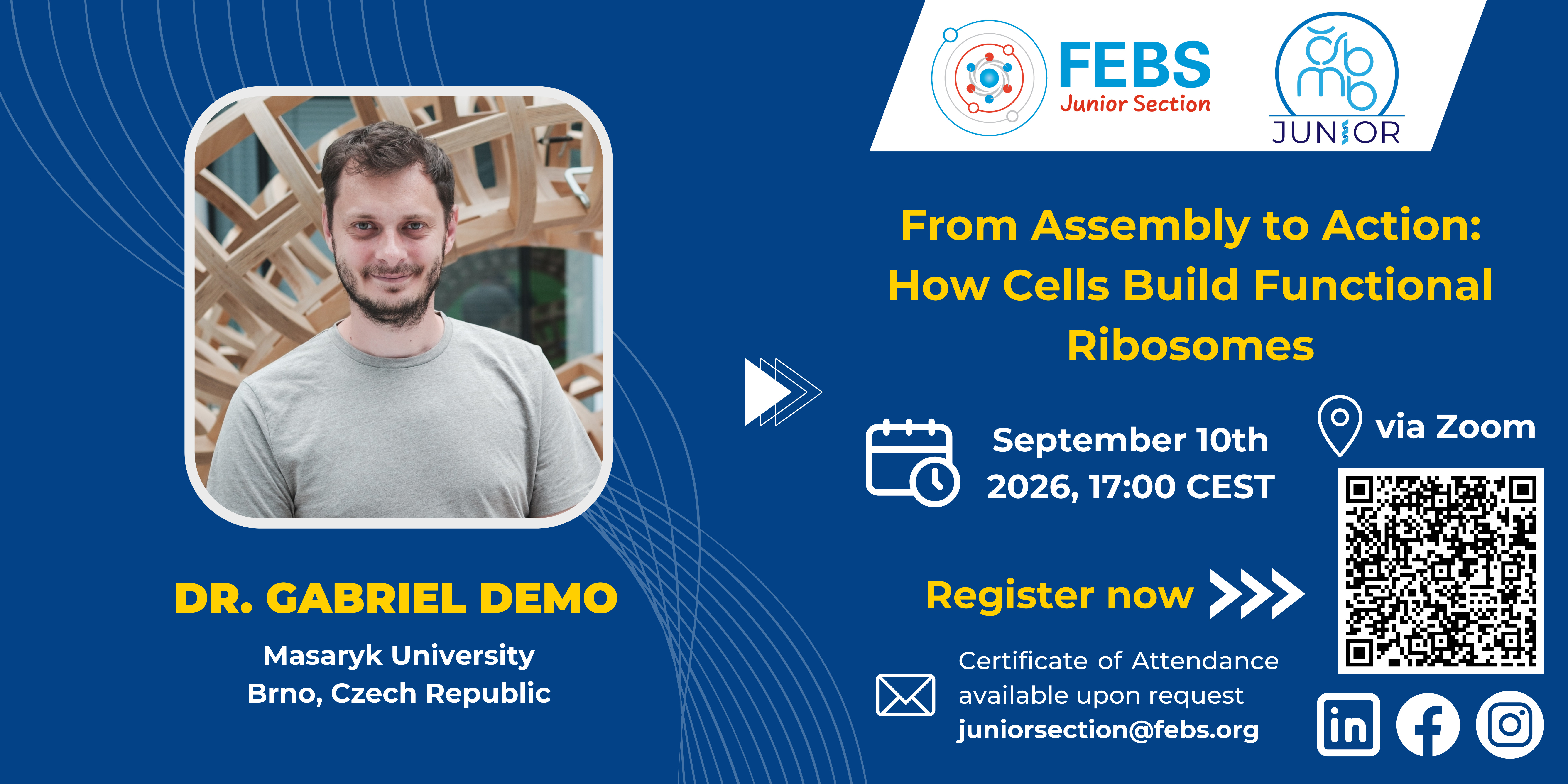
- Speaker’s name and affiliation: Dr. Gabriel Demo, Masaryk University, Brno, Czech Republic
- Talk Title: From Assembly to Action: How Cells Build Functional Ribosomes
- Date/Time (CET) of the talk: September 10th 2026, 17:00 CEST
-
Link to register:
https://us06web.zoom.us/webinar/register/WN_U0UkhYN_TISt6NscZ6PuFQ
Participants will have the opportunity to stay for an after-talk hangout to have an informal chat with the speaker, members of the FEBS Junior Section, and other participants.
Abstract
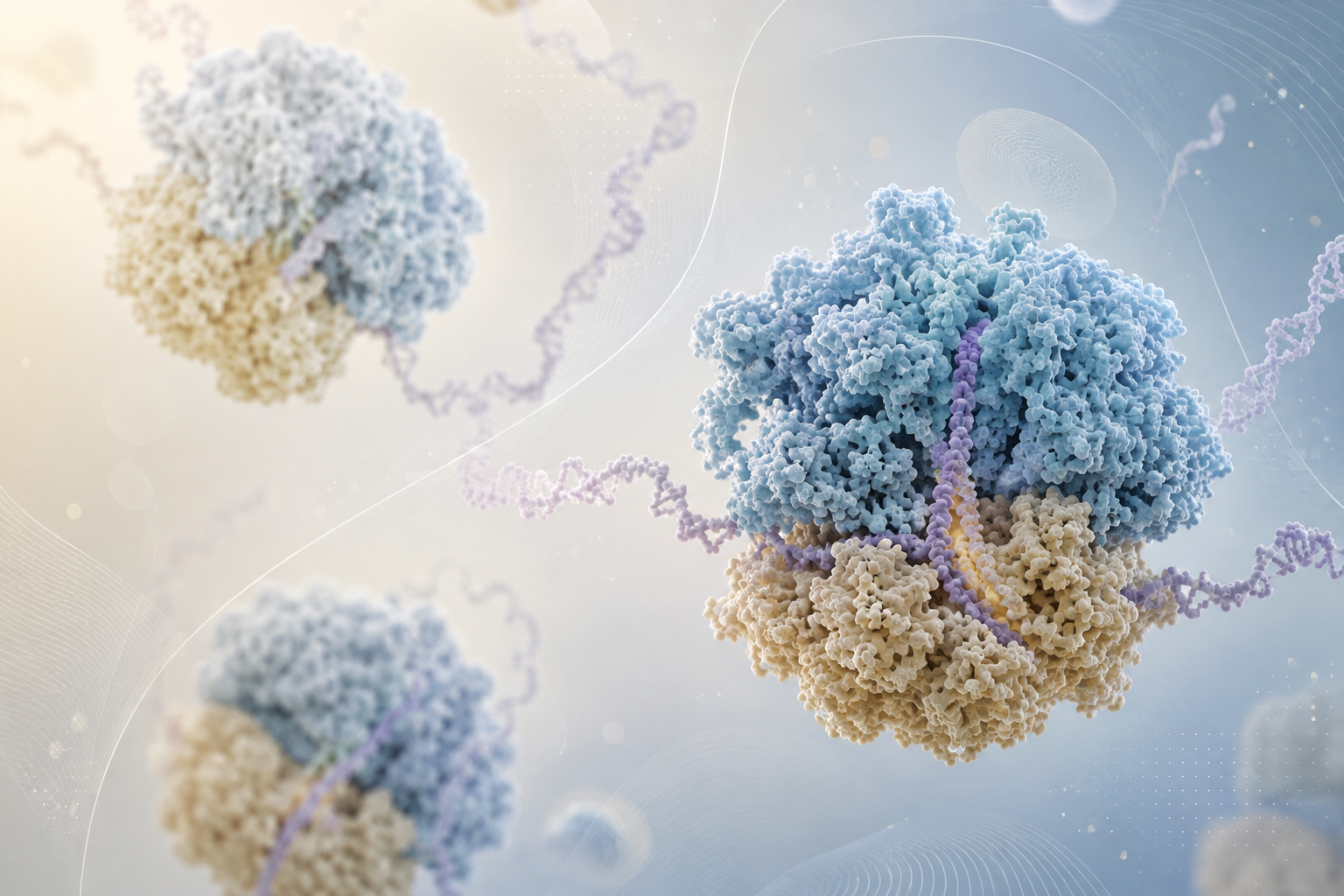
Ribosomes are essential molecular machines that produce proteins in every living cell, and their proper assembly and activation are critical for life. In this talk, two complementary studies will be presented that reveal how cells carefully control this process to ensure accurate and efficient protein synthesis. Firstly, using ensemble cryo-electron microscopy, it will be shown how bacterial initiation factors guide the formation of functional ribosomes by controlling subunit joining and driving dynamic structural changes. Secondly, it will be shown how defects in ribosome assembly - specifically the absence of a key bacterial biogenesis factor called RimM - trigger a quality control mechanism that delays ribosome activation. Together, these findings highlight how ribosome assembly and activation are coordinated to maintain the fidelity of protein synthesis.
Biosketch
Gabriel Demo, PhD, is a structural biologist and Junior Group Leader at CEITEC, Masaryk University, where he leads the Regulation of Translation research group. His research focuses on the molecular mechanisms of ribosome function, assembly, and translation regulation, with particular emphasis on how cells remodel the translation machinery during stress and adaptation. He combines high-resolution and time-resolved cryo-electron microscopy with biochemical and genetic approaches to capture dynamic states of ribosomes and their associated factors. His work spans bacterial and archaeal systems and has provided mechanistic insights into translation fidelity, ribosome rescue, transcription–translation coupling, and stress-responsive ribosome assembly and regulation.

The FEBS Junior Section is organised by students and young researchers from some FEBS Constituent Societies. They develop joint activities, such as online talks and other events, and share resources, as well as open doors for young European scientists to opportunities outside their home countries by providing the relevant contacts and fostering communication within the network.