Cells divide, migrate, specialize, and sometimes malfunction — all in exquisitely choreographed patterns across space and time. Capturing and understanding those movements in three dimensions has become one of the defining technical challenges in modern biology. Now, Biohub, a nonprofit biomedical research organization, is inviting the global AI community to help push that frontier forward.
Launched on June 29, 2026, Biohub’s researchers are hosting a new international competition on Kaggle, the world’s largest online platform for machine learning and data science. The focus: advancing cell tracking in 3D — a cornerstone capability for decoding dynamic biological processes such as embryonic development, immune response, tissue regeneration, and disease progression.
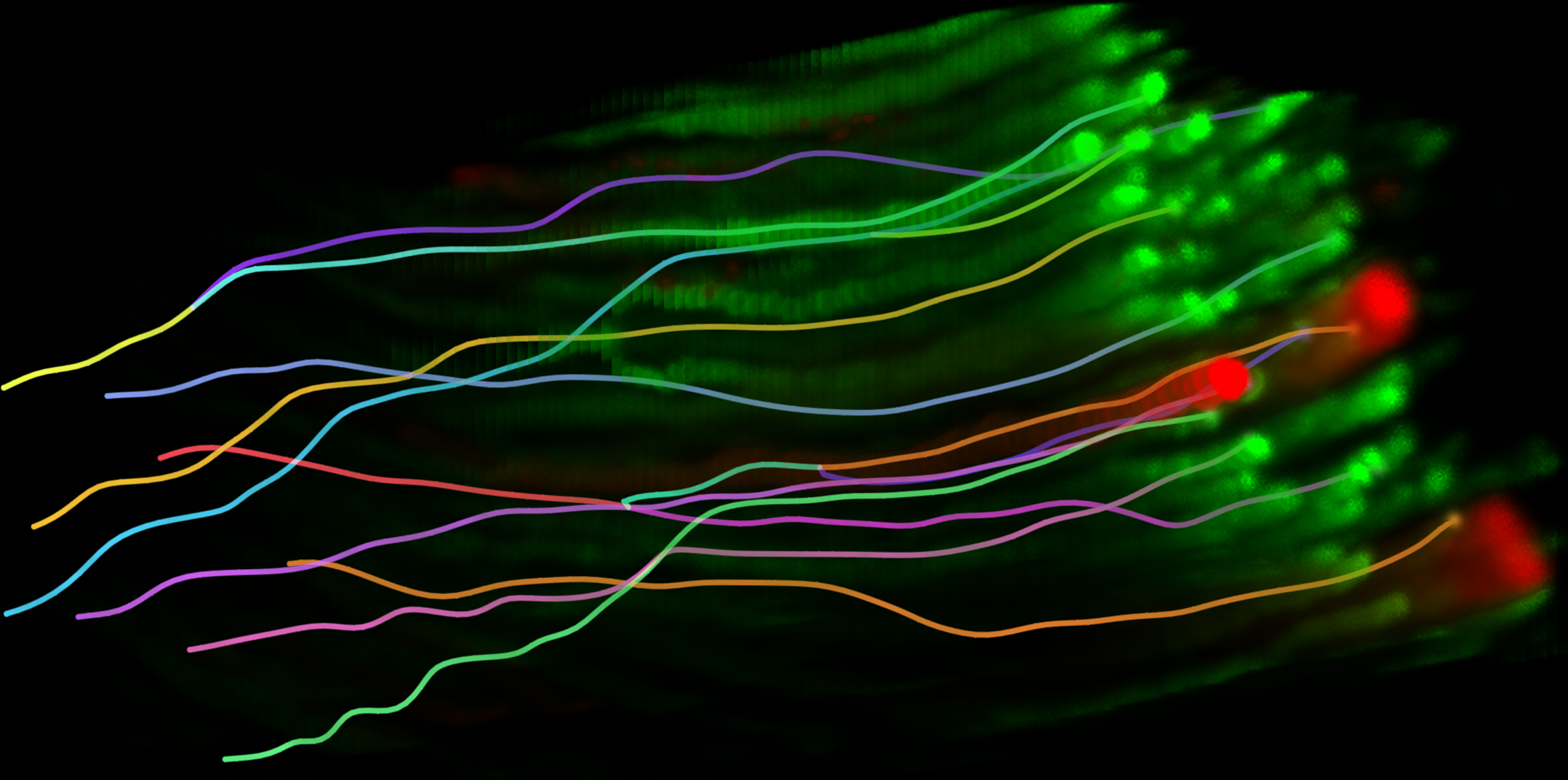
The challenge builds on a major breakthrough from Loïc Royer’s group, whose AI-powered cell-tracking algorithm, Ultrack, was published in 2025 in Nature Methods. Ultrack dramatically improved the accuracy and scalability of cell segmentation and tracking, setting a new bar for the field. Yet even with these advances, tracking tens of thousands of cells as they move, divide, and interact within living organisms remains computationally demanding and ripe for innovation.
Biohub scientists believe the next leap forward will come not from a single lab, but from a global community.
“Open competitions have a unique ability to accelerate progress,” said Royer. “By combining Biohub’s biological expertise and unique datasets with the creativity of the machine learning community, we can unlock new approaches that none of us would discover alone.”
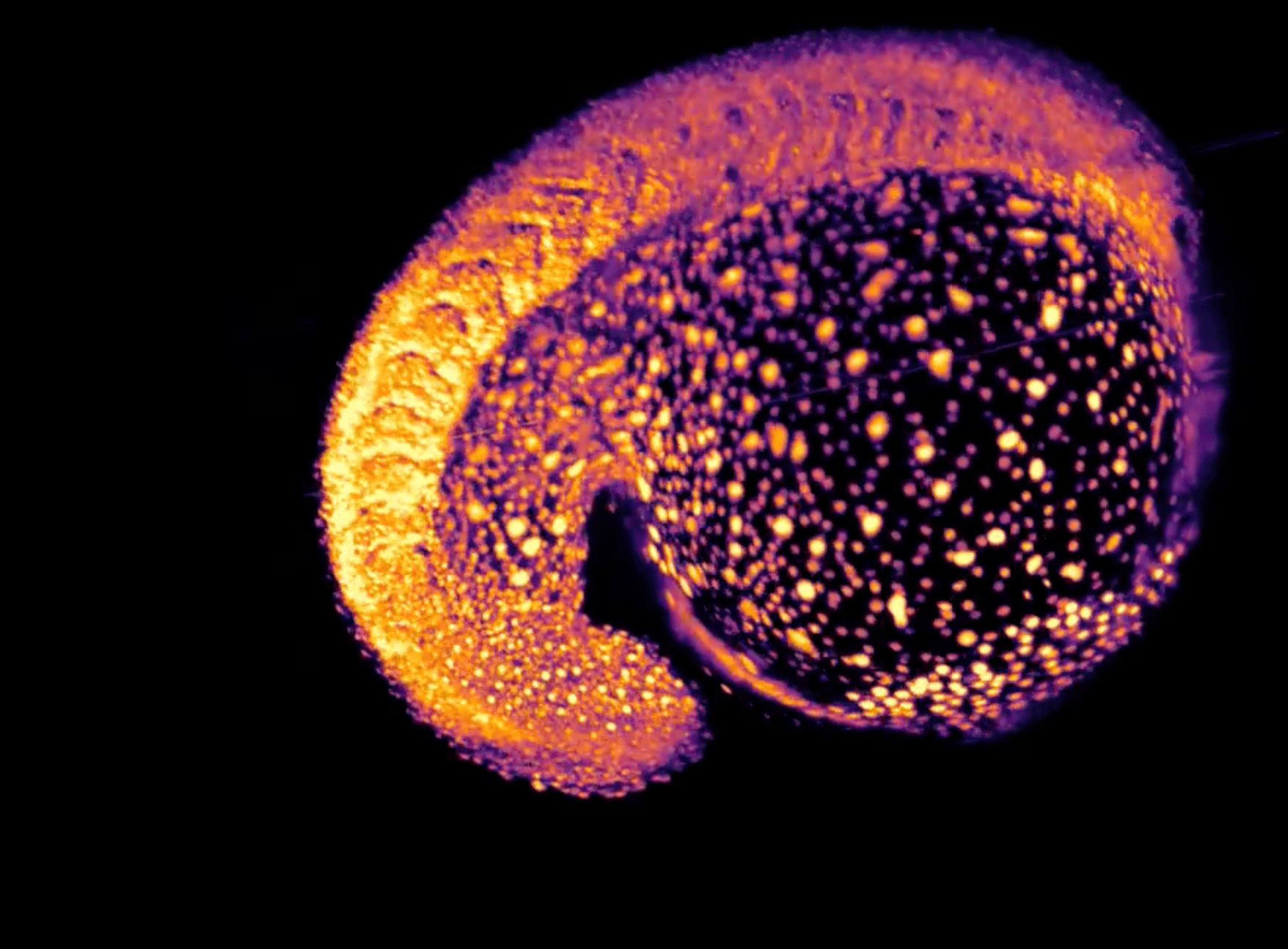
A zebrafish embryo captured with a light-sheet microscope designed and built by the Royer Group at Biohub in San Francisco.
Competitors will work with rich, real-world imaging data from zebrafish embryos generated by the Royer Group — a powerful model system for studying vertebrate development. Participants will be tasked with designing algorithms to accurately track cells in three dimensions over time and benchmark their approaches against standardized metrics. The goal is not only to improve performance but also to establish transparent, community-driven standards for evaluating cell-tracking methods.
Researchers, data scientists, engineers, and students from around the world are encouraged to participate. Scientists are also urged to share the competition within their networks to expand their reach and foster interdisciplinary collaboration. Whether entrants are seasoned computational biologists or machine learning experts tackling biological data for the first time, the challenge offers an opportunity to make a tangible impact on how scientists study living systems.
Beyond the leaderboard, the long-term vision is clear. By catalyzing new algorithms and benchmarking standards, the competition aims to accelerate discoveries across developmental biology, immunology, neuroscience, and beyond. After the challenge concludes, Biohub plans to share insights, top-performing methods, and the broader scientific impact of the community’s contributions.
As living systems continue to reveal their complexity in four dimensions, Biohub is betting that the next breakthroughs will come from a global collaboration — one dataset, one algorithm, and one bold idea at a time.
Top image provided by Biohub.