New course on dynamic photobiology
The structure-dynamics-function relationship is essential for protein biology, as proteins are inherently dynamic and adopt multiple conformations that allow them to fold, catalyze substrates, bind molecules or transmit a signal. However, watching them work across timescales ranging from femtoseconds to hours continues to pose significant challenges.
Time-resolved spectroscopy has significantly advanced our understanding of protein function by probing excited states and tracking the kinetic evolution of intermediates generated in response to external stimuli. Complementarily, time-resolved X-ray techniques, including diffraction and scattering, have elucidated atomic-resolution structures of transient intermediates and revealed conformational dynamics by capturing structural snapshots along reaction pathways. Because no single experimental technique can fully capture the complexity of these processes, quantum mechanical calculations and molecular dynamics simulations are essential for interpreting and integrating the experimental findings, leading to a more comprehensive understanding of protein function.
The FEBS Workshop ‘Time-resolved spectroscopy meets time-resolved crystallography: Advances and challenges’ taking place in Castelldefels (Barcelona, Spain) from 6–8 April 2027 is the third edition of a successful series previously titled ‘Time-resolved spectroscopy meets time-resolved crystallography: The future of dynamic photobiology’. The previous editions were held virtually in April 2023 and in person in May 2025 (you can read an overview of the 2025 course from participant Joydeep Baral and from course co-organizer Sofia Jaho).
The workshop aims to bring together early-career and senior researchers working in time-resolved spectroscopy, time-resolved X-ray methods, and computational approaches to present recent advances, discuss current challenges and explore how these complementary approaches can be integrated to deepen our understanding of the dynamic processes governing biological systems.
To date, the most accessible biological targets for time-resolved investigations have been intrinsically photosensitive proteins and the majority of the sub-ms time-resolved studies has focused on such systems. However, besides photoactivation, other triggering strategies have emerged, enabling dynamic studies of biological systems that are not naturally light-sensitive. These emerging approaches including temperature and pH jumps, rapid ligand mixing, pressure perturbations, photocage release, and chemically initiated reactions, will be prominently featured in this third edition of the workshop. The workshop will also highlight state-of-the-art instrumentation and methodologies developed at large-scale research facilities.
Workshop topics
The following topics will be addressed in oral presentations and poster sessions:
- time-resolved spectroscopy
- time-resolved (serial) crystallography at synchrotrons and XFELs
- time-resolved X-ray solution scattering
- time-resolved cryo EM
- sensory photoreceptors of optogenetic interest, membrane proteins, photosynthetic systems, UV-damage, redox systems, heme proteins, flavoproteins, etc.
- various triggering strategies including chromophore excitation, photo-uncaging, mixing and diffusion, temperature-jumps, electric field stimulation, etc.
- computational biology (MD simulations, DFT, QM/MM)
- software development for time-resolved spectroscopy and time-resolved (serial) crystallography
Invited speakers
- Gisela Brändén (University of Gothenburg)
- Serena De Beer (Max Planck Institute for Chemical Energy Conversion)
- Volha Chukhutsina (Vrije Universiteit Amsterdam)
- Gustavo Fuertes (Institute of Biotechnology of the Czech Academy of Sciences
- Polina Isaikina (Paul Scherrer Institute)
- Jose Manuel Martin-Garcia (Institute of Physical Chemistry Blas Cabrera (IQF-CSIC))
- Massimo Olivucci (Università degli Studi di Siena)
- Robin Owen (Diamond Light Source)
- Michel Sliwa (Institut Polytechnique de Paris)
- Michael Thompson (University of California, Merced)
- Briony Yorke (University of Leeds)
Tutors
- Niek van Hulst (ICFO-The Institute of Photonic Sciences)
- Judith Juanhuix Gibert (ALBA Synchrotron Light Source)
Venue and organizers
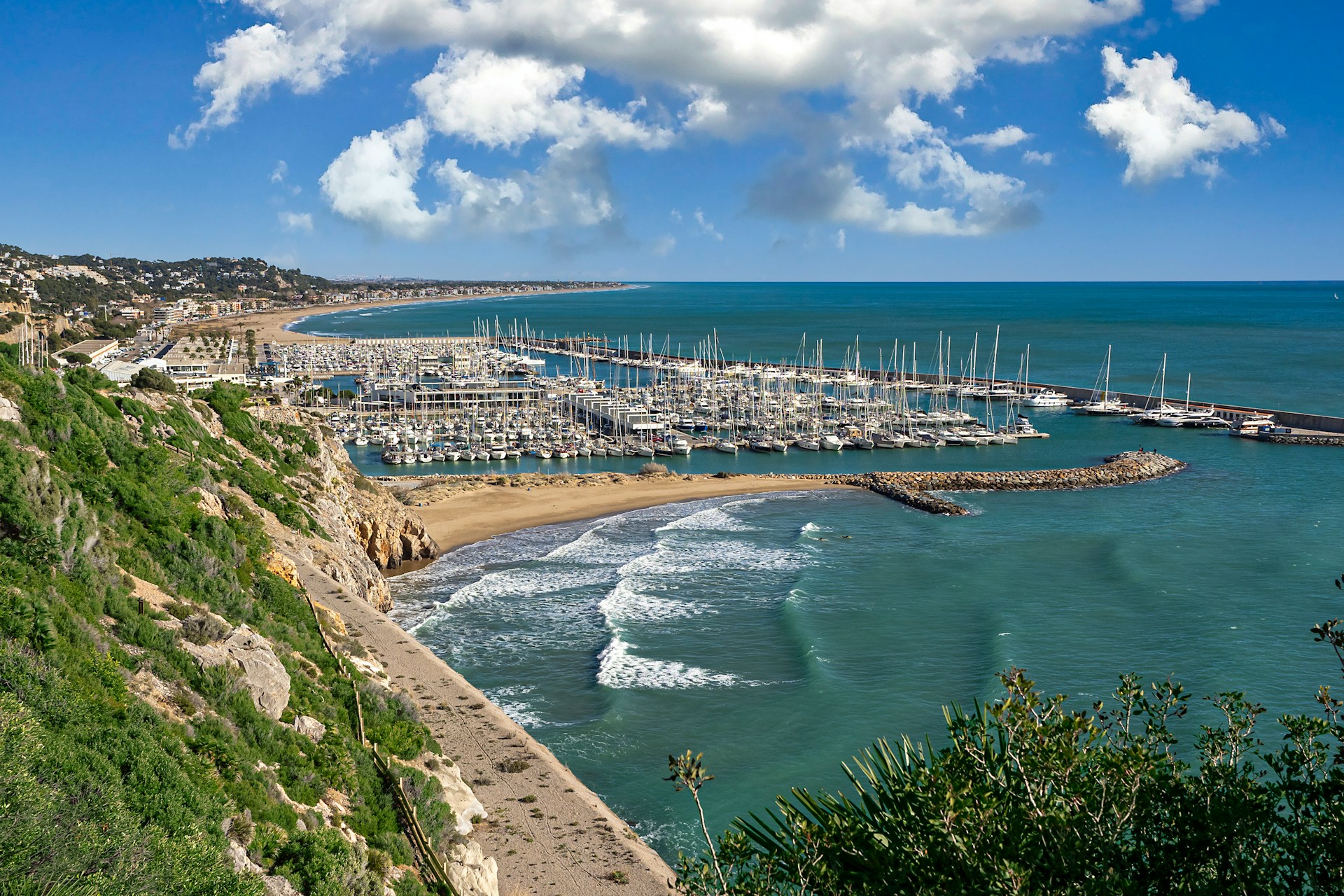
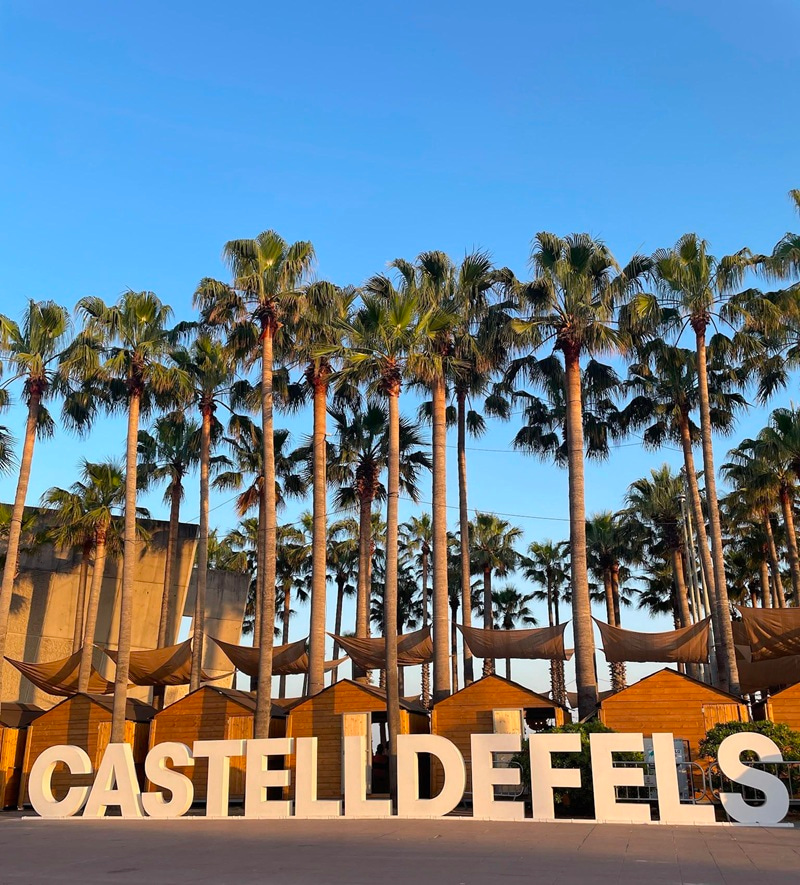
The workshop will take place in Castelldefels in Spain. Castelldefels is a suburban town of the metropolitan Area of Barcelona. The town is famous for its long beach (more than 5 km) and it is located about 20 km from Barcelona, a major cultural, economic, and financial center in southwestern Europe, as well as the main biotech hub in Spain.
The workshop will take place from 6–8 April 2027 and it will be hosted by ICFO-The Institute of Photonic Sciences. ICFO is a well-known research center dedicated to the science and technology of light. It was founded in 2002 and hosts over 400 researchers who explore advanced photonics, quantum technologies, and nanomaterials for applications in healthcare, energy and information.
The workshop is organized by Sofia M. Kapetanaki (MAX IV Laboratory), Sofia Jaho (Diamond Light Source), Martin Appleby (University of Sheffield), and Nicoletta Liguori (ICFO-The Institute of Photonic Sciences).
More info and registration
Please visit the FEBS Workshop ‘Time-resolved spectroscopy meets time-resolved crystallography: Advances and challenges’ course website, which has more information.
We look forward to welcoming early-career and senior researchers to Castelldefels for 3-days of discussion and networking pushing the boundaries of time-resolved studies.
Please share this post with peers and relevant networks, to help us reach interested participants.
Top photo by Manuel Torres Garcia on Unsplash.