Thinking like a Scientist, Part five: The Burden of Knowledge
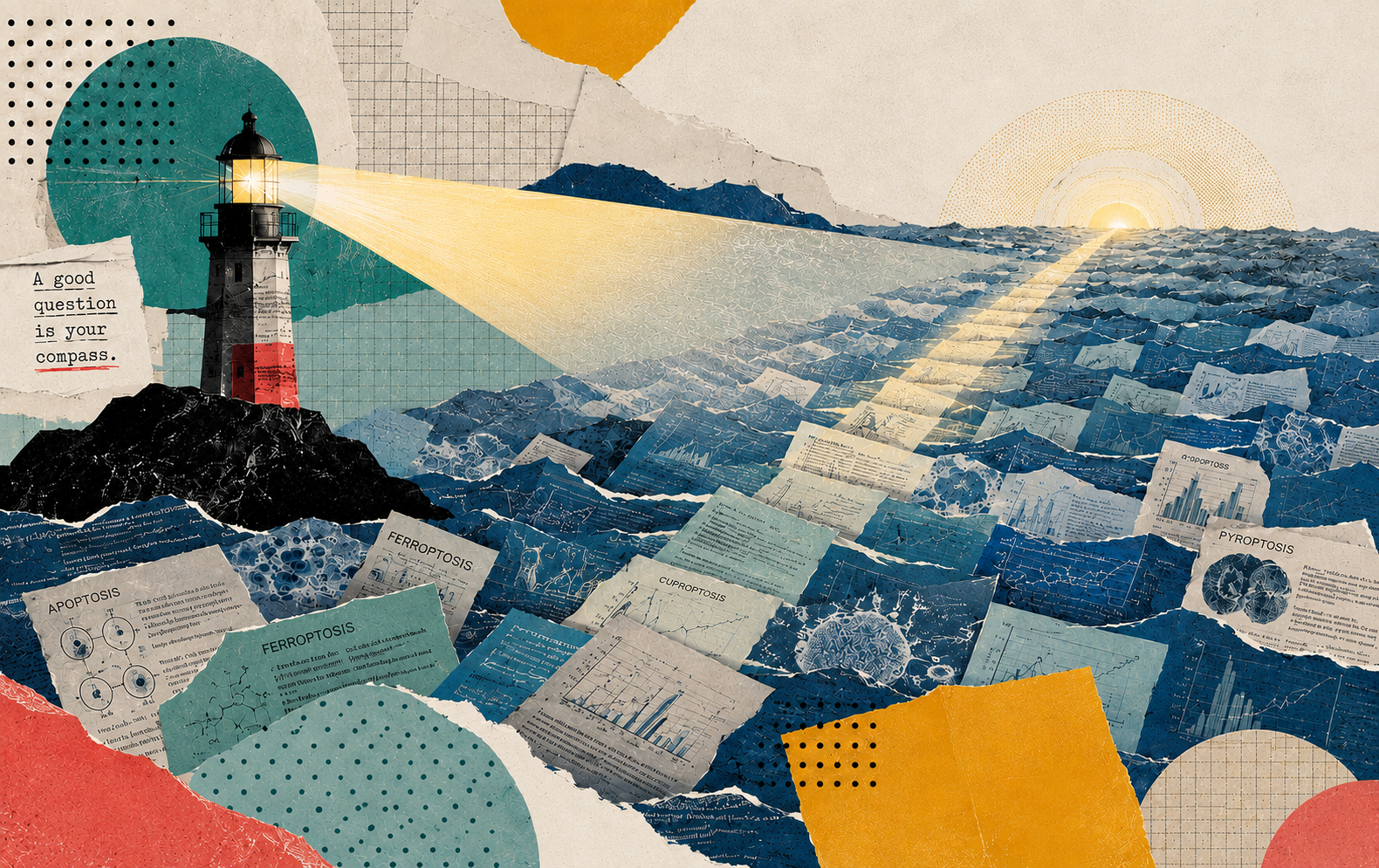
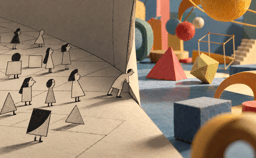
In the previous article, which focused on how to "ask a scientific question", I suggested that scientists may find it harder today to identify good questions because so much already seems to have been discovered. This phenomenon, known as the "burden of knowledge", can be particularly discouraging for early-career researchers and students, but it likely affects most scientists today.
Benjamin Jones highlighted this issue, albeit in the context of economics rather than biology, almost twenty years ago, in this article. His argument can be summarised simply: as knowledge accumulates, each new generation of innovators faces a heavier educational burden. To cope, researchers must narrow their expertise, but that narrowing can reduce individual capacity and increase reliance on teamwork, with broader implications for innovation itself.
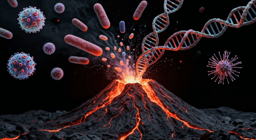
This dynamic clearly applies to the biological sciences. If one could once, for example, be an expert in "cell death" as a broad area, one must now navigate "ferroptosis", "apoptosis", "cuproptosis", "pyroptosis", "disulfidptosis", "necrosis", and probably several other forms I am forgetting. Training therefore becomes longer and more fragmented, requiring multiple forms of expertise to explore biology through an ever-growing set of technologies. Intriguingly, a recent paper in Science reports a decline in scientific disruption with academic age, suggesting that the burden of knowledge may indeed shape progress.
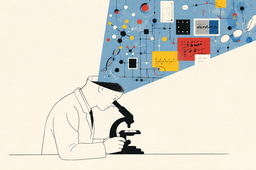
The same trend has also deepened our reliance on computational tools to make sense of the complexity we generate. In 2000, computational biology was still relatively niche; today, it is an integral part of modern research, and laboratories without computational expertise are at a clear disadvantage when it comes to interpreting complex datasets. AI now extends this shift even further. In 2026, it is rapidly becoming a practical aid for navigating science at this level of complexity.
The burden of knowledge is real, and it places particular pressure on junior researchers, who must adapt quickly to a changing landscape. How, then, can we stop that burden from becoming too heavy?
Although we cannot change the volume of literature being published overnight or ignore the growing body of knowledge, we can change how we engage with it. Here are some practical strategies for navigating modern science despite the burden of knowledge:
1. Develop a Lateral Thinking Strategy
We cannot escape the need to narrow our expertise, as Benjamin Jones argued, but we can manage it deliberately. I still believe that specialisation is necessary, even if there is now a tendency to shy away from it out of anxiety or fear of missing the next fashionable trend. When I first started in science, I could not understand how some groups could work on the same topic for decades; I dismissed that as “boring”. Later, I realised that truly complex problems cannot be addressed in just a handful of papers and then abandoned. Deep specialisation was not only necessary; it was intellectually rewarding. But specialisation should not become intellectual isolation. It needs to be paired with lateral thinking and active conversation with adjacent fields. That cross-fertilisation can create a powerful combination of depth and breadth. In short, strive for specialisation, because it remains an asset, but keep your mind open and challenge yourself through dialogue with other disciplines.
2. Read and Map the Controversies, Not Just the Data
As discussed in the previous article, reading is essential. To specialise effectively, deep knowledge is essential too. While encyclopaedic mastery is impossible, except perhaps for a very lucky few, we must learn to identify the boundaries of what is known. There are at least two ways to do this.
First, I usually suggest identifying the foundational papers of a field: the pillars on which its current paradigm rests. These landmark studies, often 10–30 years old, provide the conceptual scaffolding on which newer work is built. By understanding the original reasoning and experiments that shaped your field, you can more quickly judge which recent papers represent genuine advances and which are largely incremental variations.
Then look for what the field still disagrees on: the emerging anomalies. Older literature from adjacent fields can also help here; even work from 30 or 40 years ago may contain forgotten questions or approaches that cast current problems in a new light. By identifying debates, methodological limitations, and competing hypotheses, you can cut through the noise more effectively than by chasing consensus alone. Innovation often happens at the edges of knowledge, in what Lakatos would call the “protective belt” of science, so it is worth mapping controversies as carefully as established facts.
A practical complement to this is to avoid reading in isolation. A small reading group with a tightly defined focus, perhaps a specific controversy, a methodological approach, or an emerging technology, can turn literature review into a collaborative filtering process. Sharing the task of synthesis distributes the cognitive load and forces everyone to engage critically with the evidence. Reading and discussing papers with peers from other fields can also help you identify knowledge gaps, controversies, and novel ways of approaching problems.
3. Use AI as a Filter, Not a Crutch
It is becoming increasingly clear that large language models (LLMs) can be useful tools for navigating the scientific literature. Their strength lies, at least for now, in filtering, organising, and connecting large bodies of work across thousands of papers. By offloading part of this cognitive burden, scientists can reserve more of their attention for what these systems still handle poorly: judging the quality of evidence, recognising meaningful anomalies, and formulating genuinely original hypotheses.
Still, we should remain alert to an important distinction. There is a real difference between receiving a summary of the literature from an AI tool and constructing one for yourself. The gap between being given a synthesis and genuinely understanding the data and concepts that underlie it is substantial. If we want to become experts, we must internalise what we read and think it through critically. There is no real substitute for that.
There are also broader concerns about how LLM systems summarise papers and how reliable those summaries really are. As noted recently in Nature, these tools can accelerate parts of the process, but they still miss relevant studies, introduce distortions, and require careful human oversight. In short, use LLMs to reduce noise, but never to replace your own judgment.
The burden of knowledge is still yours to bear; LLMs merely help you carry it.
4. The Ultimate Defence: A Sharply Defined Question
Finally, we must remember the central lesson from the previous article. The burden of knowledge is only crushing if you are wandering aimlessly through the literature. A precise, sharply defined scientific question acts as a laser. If you have crafted a good question, you no longer need to worry about all 3,000 papers on Opa1; you only need to read the handful of papers directly related to the specific mechanism you are interrogating. A good question reduces the burden of knowledge from an insurmountable mountain to a manageable path.
Navigating modern science requires accepting that we can no longer know everything. By adapting our strategies, sharpening our questions, using new tools wisely, mapping the boundaries of our fields, and building intellectual communities around shared problems, we can still thrive within this complexity. In fact, one might even learn to enjoy the vast body of knowledge humanity has generated so far. Yet learning to cope with this burden individually leaves a larger and more troubling question unanswered. What is this burden doing to the scientific system as a whole? Have we simply learned to survive within a structure that suppresses true paradigm shifts? This epistemological blind spot is the subject of Part 6.

Our lab uses genetically modified mouse models and a combination of cell biology, molecular biology, and biochemistry techniques to study the role of altered mitochondrial dysfunction and metabolism in human diseases. A primary analytical tool of the group is metabolomics, which enables the parallel quantification of hundreds of small molecule metabolites. The team also uses computational approaches to integrate datasets from multi-dimensional analyses, including metabolomics, proteomics, and transcriptomics, with the aim to model aging-related disorders and to generate mechanistic hypotheses that will be cross validated experimentally.