SEBBM Journal, issue nº 229: 'Phase Transitions in Biology'
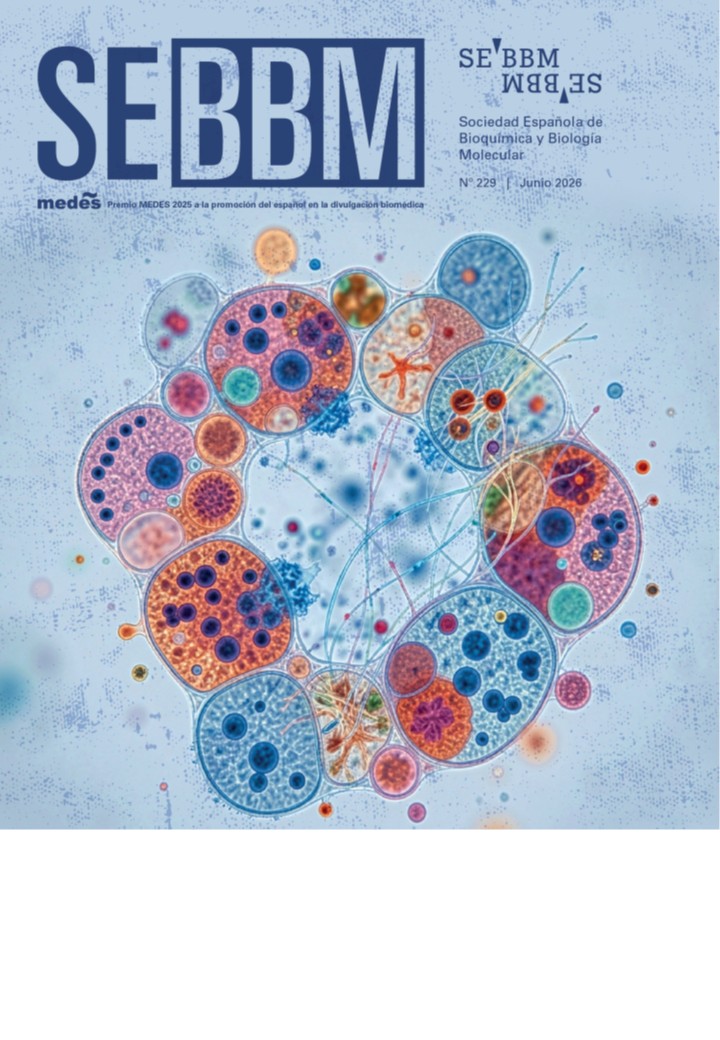
The SEBBM Journal is a channel for analysis, reflection and dissemination of scientific activity in Spain and of public and private research policies. Its origins date back to 1963 and it currently publishes thematic issues covering transversal research in the field of biochemistry and molecular biology. The articles are commissioned by the best specialists in the subject. Each issue also highlights the most relevant educational and scientific work of SEBBM members, as well as SEBBM news.
The current issue ‘Phase Transitions in Biology' (nº 229, June 2026) has been coordinated by Dr. Xavier Salvatella from IRBarcelona, Spain, and Inmaculada Yruela fron CSIC, Spain.
'Phase separation and its dynamics —fundamental concepts in physical chemistry— play an important role in the organization and activity of cells. In the cytoplasm, the nucleus, and the cell organelles, phases with varying degrees of density often coexist: ranging from a dense or viscous phase, in which intermolecular interactions are strong and the molecules are highly compacted, to a fluid phase, in which interactions are weaker and the molecular concentration is lower.
Phase transitions —involving lipids, proteins, RNA, DNA, and other molecules— respond to physical and chemical stimuli, and control and regulate cellular functions. Over the past twenty years, there has been a revolution in our understanding of the importance of phase transitions in biological processes. Liquid-liquid phase transitions (LLPTs) and the formation of molecular condensates that influence cellular activity itself, stress responses, or the onset of certain diseases have sparked great interest. Noteworthy is the role of ductile or intrinsically disordered proteins (IDPs), which, together with other proteins or RNA and DNA molecules, play a central role in these transitions, in which the interacting molecules, their concentration, the multivalent interactions that occur, and post-translational modifications (i.e. phosphorylation) play a fundamental role.
Issue 229 of the SEBBM Journal contains four articles detailing advances in this field across different biological systems (bacteria, humans, plants), which have changed our understanding of cellular organisation and processes.
Rubén López Sánchez, David Pantoja Uceda and Douglas V. Laurents from IQF ’Blas Cabrera', CSIC, Madrid, Spain, highlight the importance of advances in biophysical and imaging techniques, in silico prediction algorithms and computational simulation in driving forward the study of phase transitions in complex biological systems. https://doi.org/10.18567/sebbmrev_229.202606.dc2
Xavier Salvatella from Institute for Research in Biomedicine (IRB), The Barcelona Institute of Science and Technology and ICREA, Barcelona, Spain, explains the unique properties and functions of intrinsically disordered proteins (IDPs), which enable them to play a role in RNA synthesis, modification, cleavage and splicing, as well as in the regulation of RNA translation and the formation of molecular condensates. This research has led to a better understanding of previously unknown aspects of their role in phase transitions within cells. https://doi.org/10.18567/sebbmrev_229.202606.dc3
Carla Garcia-Cabau from Institute for Research in Biomedicine (IRB) and The Barcelona Institute of Science and Technology, Barcelona, Spain, explains as the CPEB4 protein, together with other proteins and RNA, forms structures resembling ‘liquid droplets’ and plays a role in the development of severe autism. The research also suggests potential therapeutic strategies based on the physical properties of molecular condensates when anomalous phase transitions occur. https://doi.org/10.18567/sebbmrev_229.202606.dc4
Emilio Gutiérrez Beltrán from IBVF, University of Sevilla-CSIC, Sevilla, Spain, describes the significant advances made in this field over the last ten years in plants, as well as the proteins that have been identified as playing a role in the regulation and nucleation of stress granules (SG), and the functions they perform. https://doi.org/10.18567/sebbmrev_229.202606.dc5.'
The issue is available at https://sebbm.es/revista/numeros/transiciones-de-fase-en-biologia/
Part of this post is a translation of text written in Spanish by Dr. Inmaculada Yruela from EEAD, CSIC, Spain and published on the SEBBM website on June, 2026.
Reference:
Yruela I. 2026 Transiciones de fase en biología. SEBBM 229. https://doi.org/10.18567/sebbmrev_229.202606.dc1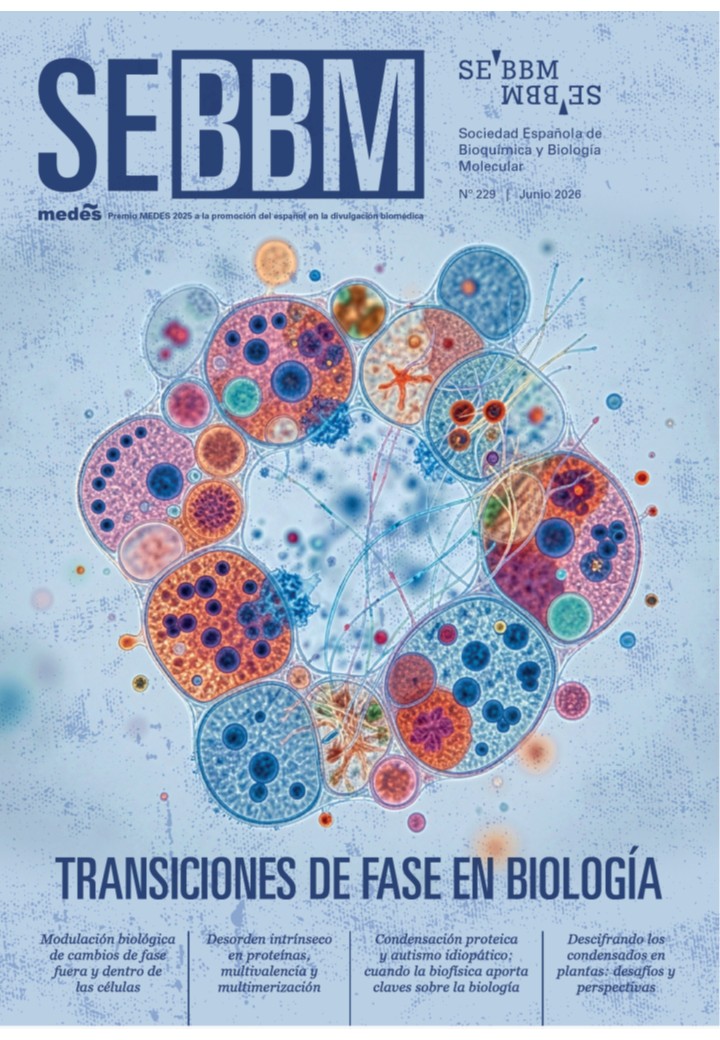

Dr. Inmaculada Yruela graduated and earned her doctorate in Chemistry at the University of Sevilla (Spain). She has been a visiting guest scientist at the Max Planck Institute for Chemical Energy Conversion in Mülheim an der Ruhr (Germany) and at Department of Biochemistry and Molecular Biology in Indiana University School of Medicine (USA). She is research scientist at the CSIC and group leader at Computational and Structural Biology in Estación Experimental de Aula (CSIC), Zaragoza (Spain). From the early 1990s she has been studying the relationship between the structure and function of redox protein complexes involved in photosynthesis (I.e. PSII, cytochromes) among other, and more recently the role of intrinsic ductiliity and plasticity of proteins in organismal complexity, multicellularity and evolution. She has led science outreach projects. She is currently member of SEBBM and editor-in chief of SEBBM Journal.



Join the FEBS Network today
Joining the FEBS Network’s molecular life sciences community enables you to access special content on the site, present your profile, 'follow' contributors, 'comment' on and 'like' content, post your own content, and set up a tailored email digest for updates.