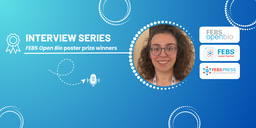
Interview series: Meet Miriam Linsenmeier, a FEBS Open Bio Poster Prize Winner


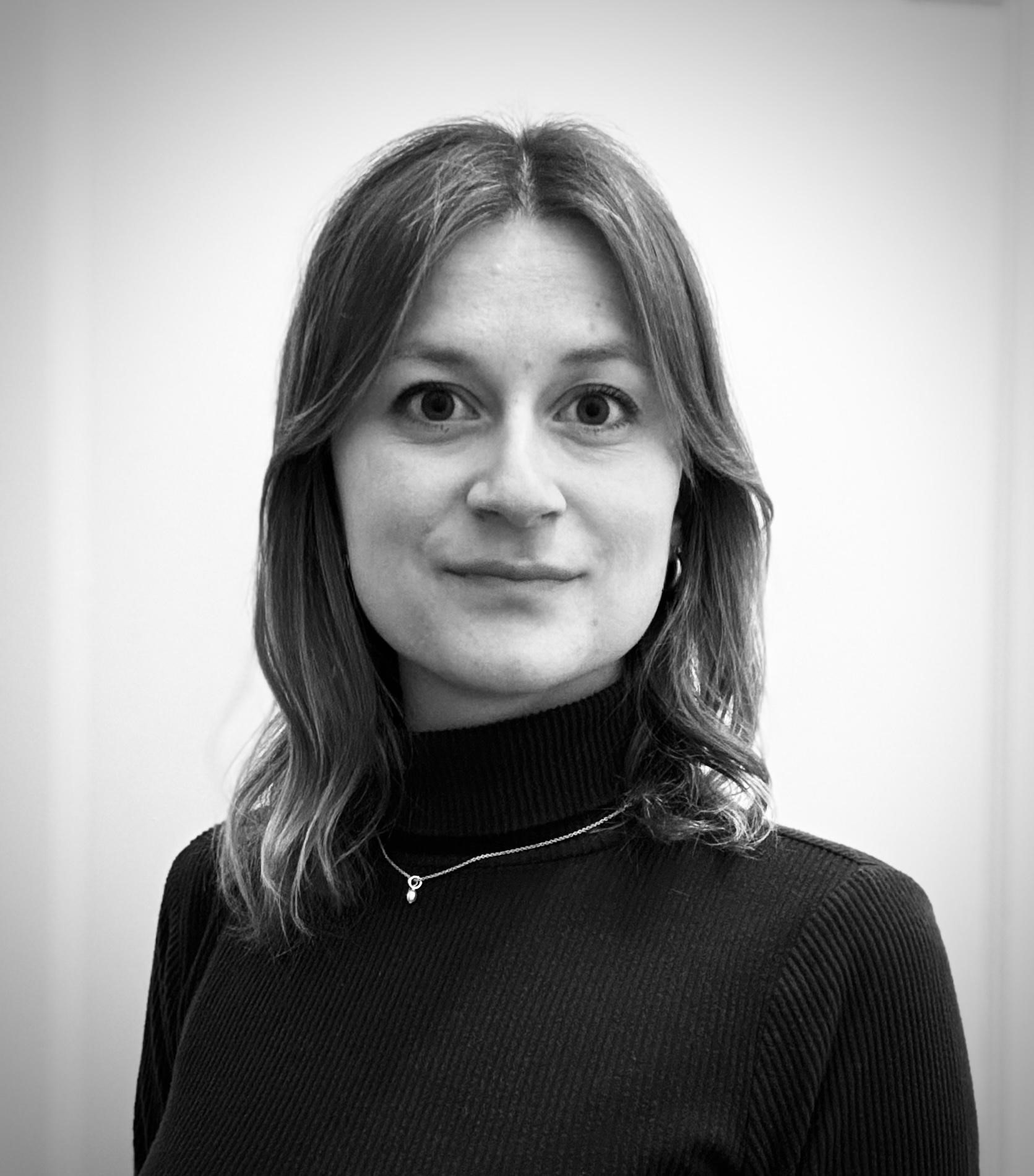
Our interviewee is Miriam Linsenmeier, a postdoctoral researcher from the University of Pennsylvania, Perelman School of Medicine, Department of Biochemistry and Biophysics, Philadelphia, USA. Miriam received a FEBS Open Bio Poster Prize at the ‘’GBM Compact – Focus on Condensate Biology Meeting’’ (18–19 September 2025), in Frankfurt, Germany.
Tell us about your research topic/work. What project(s) are you working on? What is the aim of your study?
I am broadly interested in understanding how cells compartmentalize their interior by forming biomolecular condensates. These membraneless organelles are not enclosed by typical lipid bilayers. Instead, they form through phase separation and locally concentrate proteins and nucleic acids to carry out specific biochemical processes. When such assembly processes go awry, aberrant structures can form and lead to diseases such as Alzheimer’s Disease or Amyotrophic Lateral Sclerosis (ALS).
The work that I presented at the GBM Compact Meeting in Frankfurt focuses on regulatory mechanisms developed by cells to ensure that physiological condensate formation occurs, while faulty, disease-associated protein aggregation is inhibited. We found that importins are one class of regulators that can control complex protein assembly landscapes in test tube and in cells. We also show that the absence of importins or the presence of disease-associated mutations leads to faulty, potentially pathogenic protein assemblies. In the future, we hope to design novel therapeutics with new modes of action to suppress protein aggregation in neurodegenerative diseases.
Who or what inspired you to choose a career in science?
My interest in biochemistry was sparked in high school. I was fascinated by proteins, nucleic acids, and other biomolecules acting as building blocks of entire organisms. Understanding the fundamental principles of life was what made me want to become a scientist. Luckily, I had several fantastic teachers and mentors who encouraged me to pursue a career in STEM. During my bachelor’s studies, I joined a lab focused on pathomechanisms underlying neurodegenerative diseases. The fact that there is no cure for these devastating diseases, combined with the vast need and potential for discovery in this field, motivated me.
In the end, I think it came down to a combination of finding a research topic that truly fascinated me and being surrounded by inspiring scientists and supportive mentors who gave me many opportunities to follow my interests.
How does it feel to receive a FEBS Open Bio Poster Prize as recognition for your work? How do you see this Prize influencing your career and future plans?
I really enjoyed the poster session at the GBM conference, it was a great opportunity for scientific exchange and to get feedback on the data. This poster prize is a very generous recognition of our work, and I am really grateful to FEBS Open Bio for sponsoring the award. It motivates me to go on and discover more of nature’s mysteries!
What advice would you give to aspiring students/scientists?
Find a topic that you love. Supportive mentors make all the difference. And don’t forget to take breaks and find something outside of science that brings you joy.
Where do you envision the future of your career?
I hope to do science for a very long time. I particularly enjoy thinking deeply about a topic and contributing small puzzle pieces that push the limits of what we know about nature and the world around us. I also enjoy working with scientists from other disciplines. Such collaborative, interdisciplinary environments allow us to be creative and to learn from longstanding experts in a field, while also working with younger scientists and guiding them on their own professional paths. To continue doing this in the future, I would like to become a research group leader after my postdoc, leading my own independent research program.


Join the FEBS Network today
Joining the FEBS Network’s molecular life sciences community enables you to access special content on the site, present your profile, 'follow' contributors, 'comment' on and 'like' content, post your own content, and set up a tailored email digest for updates.