Intercepting the Molecular Echoes of 2050
In the past, the future was envisioned through flying cars; few paused to imagine the revolution of human health. By 2050, diseases are no longer a matter of fate. We no longer wait for symptoms to scream; instead, we listen to the molecular whispers of our cells. Cancer is no longer defined as a disease that begins when a tumor becomes visible. Rather, it is understood as a dynamic, measurable, and modifiable biological process that begins decades before manifestation. Prevention does not replace treatment; it precedes and shapes it, rendering intervention unnecessary in most cases.
In this new era, cancer prevention is a biological surveillance architecture seamlessly integrated into life. Advances in cell-specific exosome isolation and nanoplatform integration form the earliest protective layer of health. In such a world, everyday surfaces and wearable bio-interfaces are equipped with high-affinity aptamer-based sensors. These systems capture the earliest epigenetic shifts and proteomic variations within exosomes before a single malignant cell can proliferate, enabling a “Molecular Interception” era in which precursor states are detected and reversed in real time. Guided by AI models trained on longitudinal data, transient inflammation is distinguished from sustained oncogenic drift, enabling constant, passive, and non-invasive monitoring.
Prevention in 2050 is both predictive and personalized. Every individual possesses a “risk twin”—a computational model integrating genomic predisposition, epigenetic aging, and environmental exposures to simulate how interventions alter cancer probability. The focus consequently shifts to interception: interventions aim to normalize unstable cell populations through epigenetic reprogramming and microenvironmental modulation before heterogeneity and resistance emerge.
Ultimately, this 2050 vision is as much an ethical triumph as a technological one. Prevention becomes a societal metric, where urban design and chemical safety are evaluated by their capacity to suppress carcinogenesis. What was once a terminal diagnosis becomes a manageable fluctuation within a biochemical profile, corrected long before it alters a human life. The greatest scientific achievement of our century is not the cancers we have cured, but the millions of heartbreaking stories never written because the disease was intercepted before it began. In this future, cancer does not start with diagnosis; it begins with molecular deviation and ends with interception.
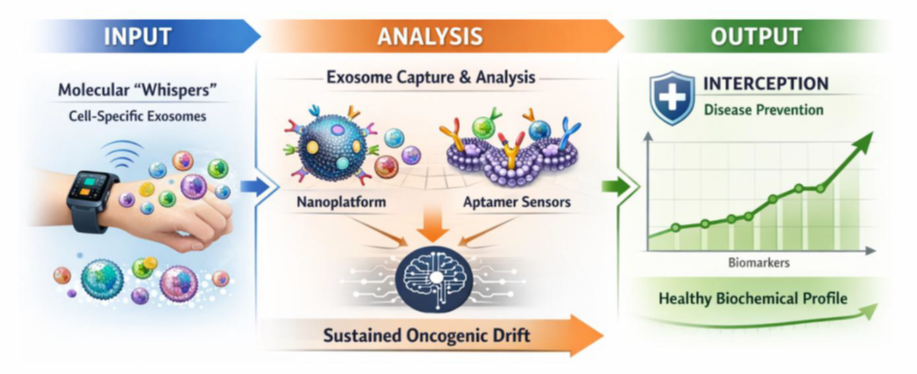
Figure 1: Conceptual framework of the 2050 Molecular Interception Ecosystem, featuring integrated bio-surveillance via aptamer-based nanoplatforms.
Image note: The header image accompanying this article was generated by the FEBS Communications team using artificial intelligence for illustrative purposes only. It does not depict real experimental data, clinical material or microscopy, and should not be interpreted as a scientific image.