FEBS Open Bio: Looking ahead in 2026

With the start of the new year comes the familiar ritual of setting goals, renewed focus, and preparing for what lies ahead. In this post, we share a glimpse of what 2026 will look like for FEBS Open Bio, including the exciting activities and initiatives planned.
Upcoming Special Issues:
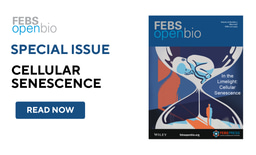
We are excited to continue highlighting hot topics as part of our “In the Limelight” series – a curated collection of timely articles on areas of crucial interest. Expect to see special issues on topics such as cellular senescence, bioplastics & biopolymers, host-pathogen interactions, and more.
Webinars:
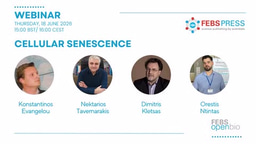
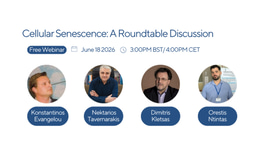
FEBS Press is ramping up its webinar offerings this year and the first one of 2026 is just around the corner! On Tuesday 10th February at 16:00 (CET), FEBS Open Bio will be hosting a free, 45-minute webinar entitled “Tumor-Stroma Interactions: A Roundtable Discussion” to accompany our recent special issue on this topic. Join this interactive session to explore the dynamic crosstalk between tumour cells and their surrounding stroma. Don’t forget to sign up for the webinar here!
FEBS Advanced Courses:
This year, FEBS Open Bio editors will be attending a few FEBS Advanced Courses to engage with early-career researchers (ECRs) and introduce them to the benefits of publishing in FEBS Press. You can expect to see us at the following courses: “Protein Termini 2026: From Mechanisms to Biological Impact” (June 3-6, Palermo, Italy) and “Extracellular Matrix in Health and Disease: Structural Dynamics, Cell-Cell Communication, and Microbiome Crosstalk” (September 22–27, Eretria, Greece). The journal will also be awarding poster prizes to the presenters of excellent research at these events.
FEBS Congress:
As the 50th FEBS Congress approaches in Maastricht, we are delighted to continue our tradition of supporting young scientists and interacting with the global research community. Editors will be attending to connect with researchers, answer queries, and provide insights on the publishing process. This milestone event is set to inspire new collaborations, and we can’t wait to get involved.
Research Protocols:
Building on last year’s success, the journal is increasing its focus on Research Protocols – detailed experimental protocols that include a comprehensive list of all reagents and a section for ‘Tips and Tricks’. This year, we plan to publish two new “In the Limelight” issues on Photobiology and Fluorescence Microscopy, to highlight the important of reproducible and validated protocols for ECRs and beyond.
Early-Career Reviewer Hub:
Finally, we’re excited to be launching the Early-Career Reviewer Hub later this year. This programme will offer ECRs the chance to participate in peer review, particularly for Research Protocols, and help them gain valuable experience for their professional development. We hope this new initiative will encourage the next generation of scientists to engage more deeply in the publishing process.
As we embark on this exciting year ahead, we would like to take a moment to thank again our readers, authors, reviewers, and editors who keep us moving forward.
If you would like a more in-depth look into our progress in 2025 and plans for 2026, be sure to read our January editorial here.