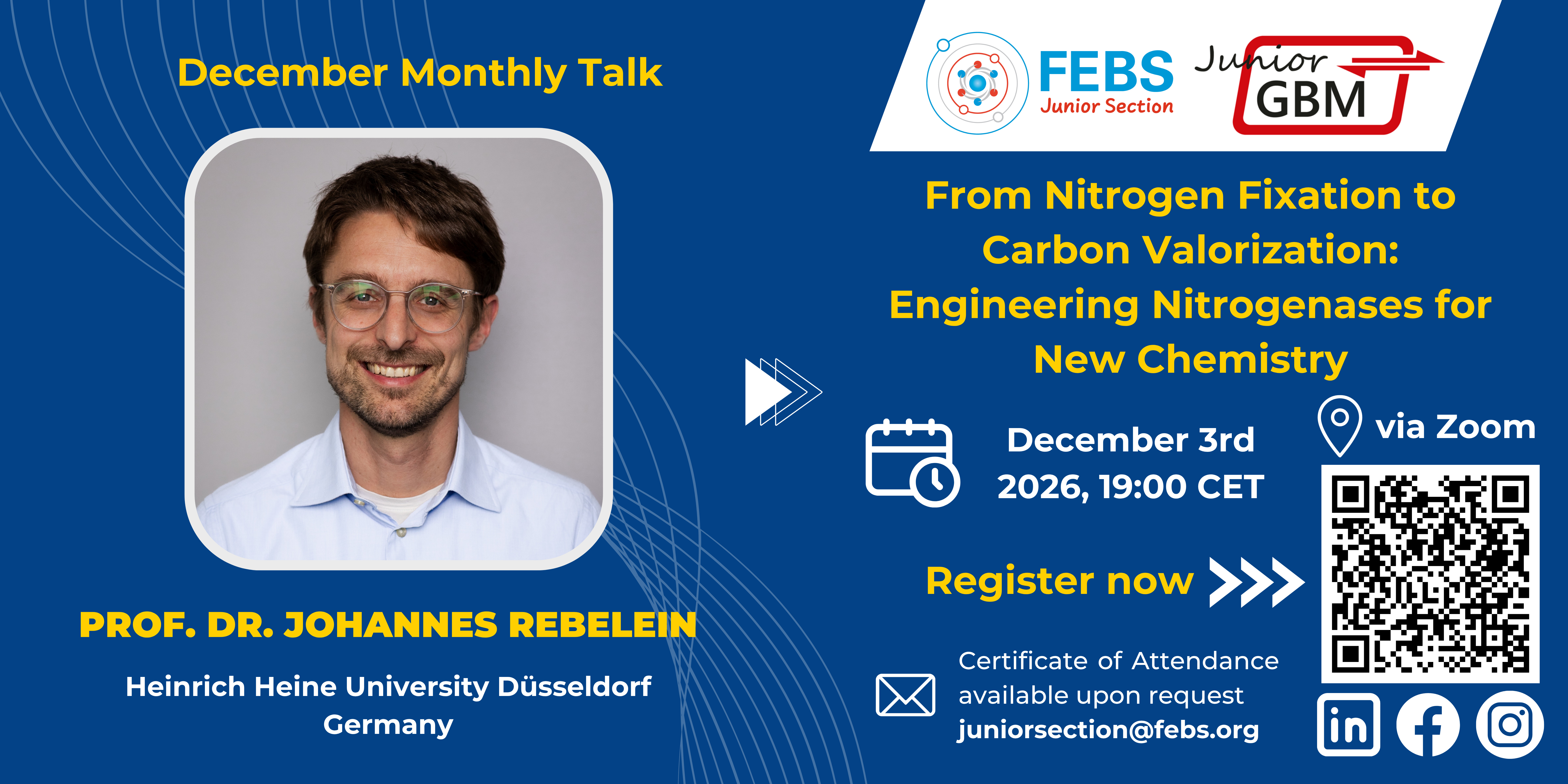
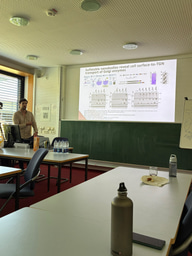
FEBS Junior Section presents Johannes Rebelein
This talk is an activity from the FEBS Junior Section, an initiative set up by students and young researchers from some of the FEBS Constituent Societies. Each month, members of the FEBS Junior Section organize an online event on either a research or a career topic. This talk is coordinated by Junior-GBM, the junior section of the German Society for Biochemistry and Molecular Biology (GBM).
- Speaker’s name and affiliation: Prof. Dr. Johannes Rebelein, Head of the Institute for Molecular Enzyme Technology, Heinrich Heine University Düsseldorf, Forschungszentrum Jülich, Germany
- Talk title: From Nitrogen Fixation to Carbon Valorization: Engineering Nitrogenases for New Chemistry
- Date/Time of the talk: December 3rd 2026, 19:00 CET
- Link to register: https://us06web.zoom.us/webinar/register/WN_Wyvb8vyqRxOvnvmHKeFGiA
Participants will have the opportunity to stay for an after-talk hangout to have an informal chat with the speaker, members of the FEBS Junior Section, and other participants.
Abstract
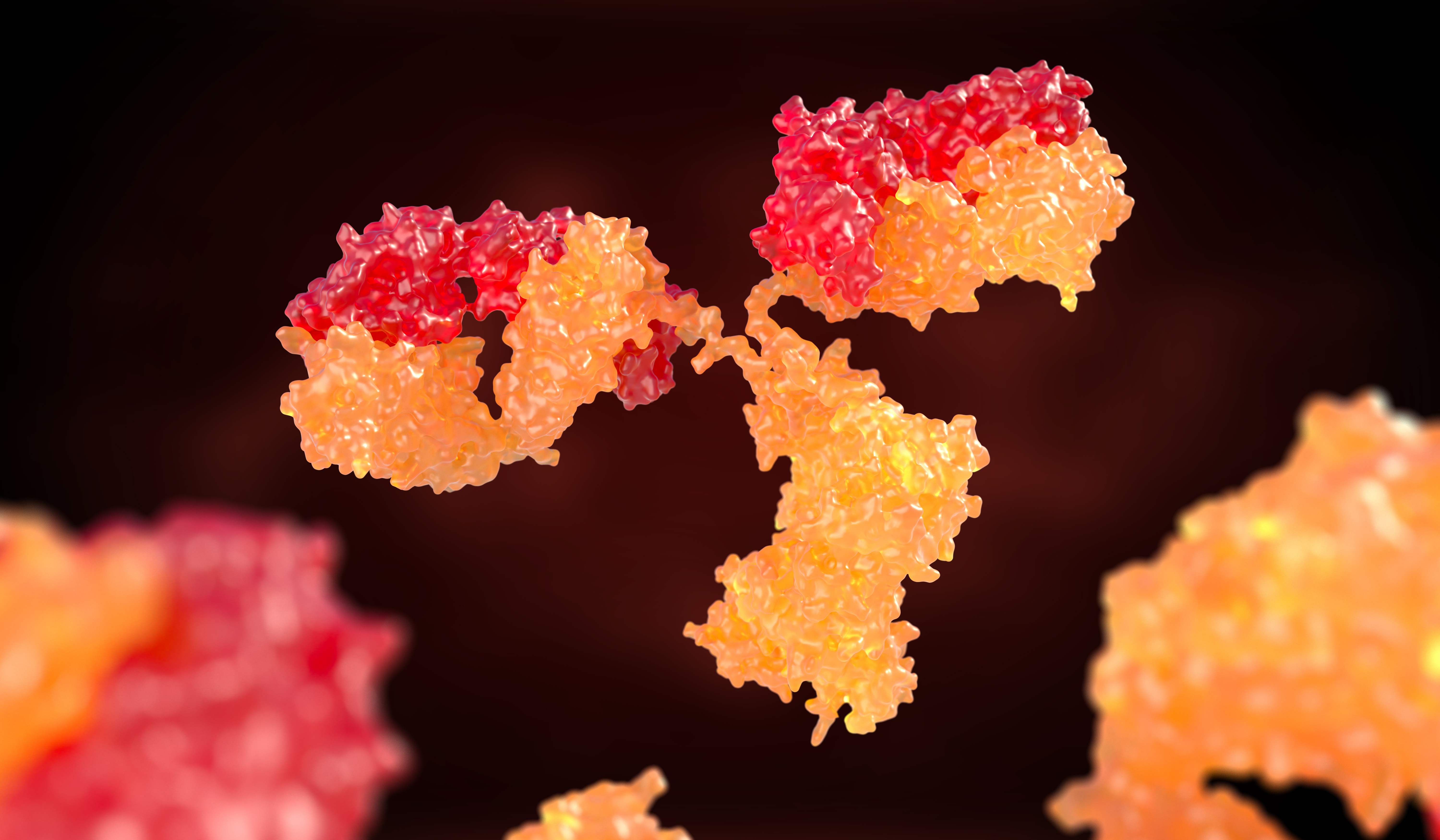
Nitrogenases are the only enzymes able to reduce dinitrogen (N₂) to ammonia, driving the global nitrogen cycle. Recent studies have revealed that these metalloenzymes also catalyze the reduction of CO₂ to CO, formate, and hydrocarbons, suggesting new pathways for CO2 conversion.
The mechanistic basis and structural determinants for these activities and product profiles remain poorly understood. Leveraging high-resolution cryo-EM we map structural features governing catalysis. Guided by these insights, we engineered nitrogenase variants that shift the product profile toward hydrocarbons and significantly enhance CO₂ reduction selectivity in the presence of N₂. These findings redefine nitrogenase substrate promiscuity, provide a mechanistic blueprint for engineering CO₂-reducing biocatalysts, and establish Fe-nitrogenases as promising platforms for sustainable carbon valorization.
Biosketch
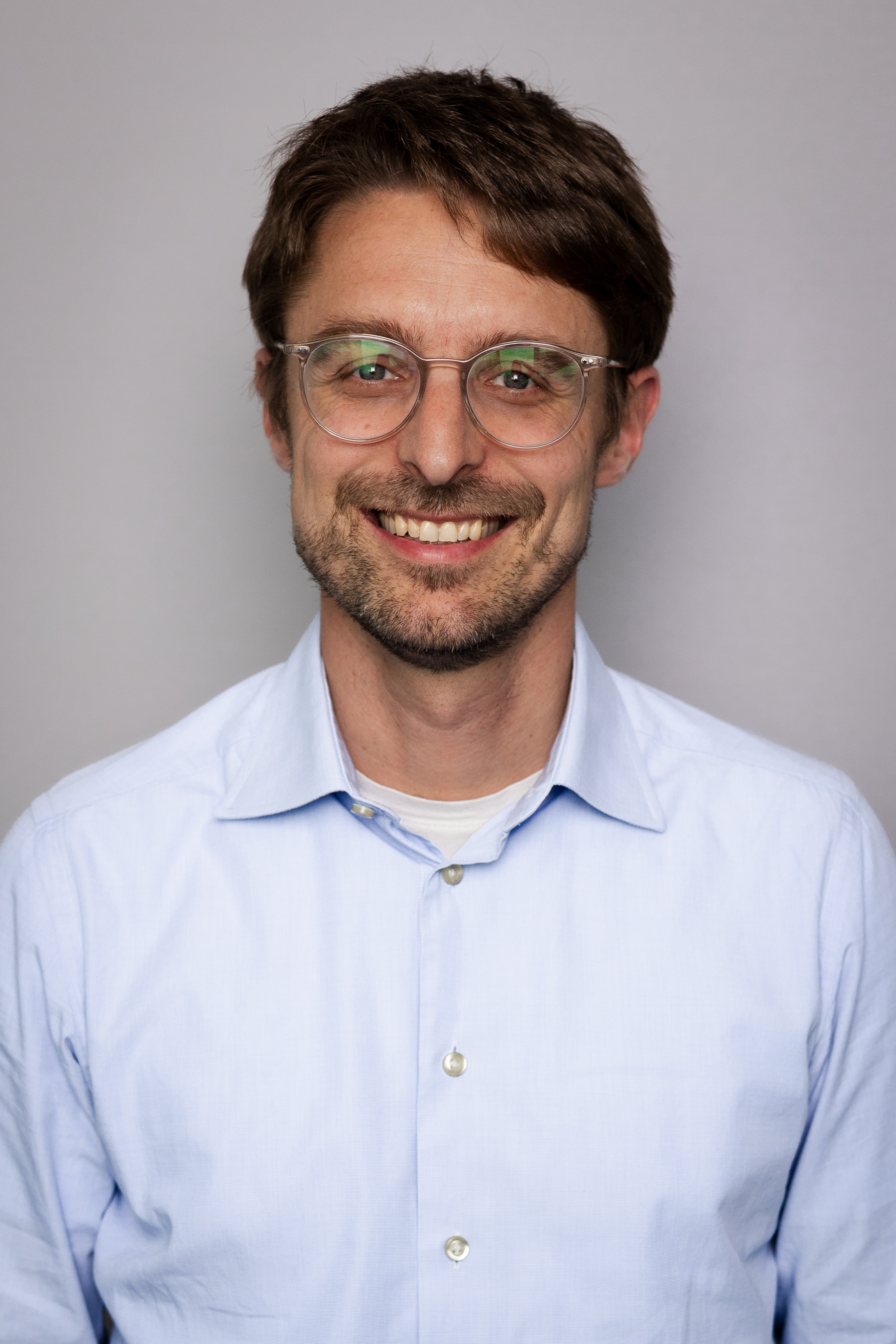
Johannes Rebelein is a leading expert in metalloenzyme biochemistry and catalysis, focusing on nitrogenase(like) enzymes. He is Professor for Sustainable Biotechnology at Heinrich Heine University Düsseldorf and Director of the Institute for Molecular Enzyme Technology (IMET) located at the Forschungszentrum Jülich. Prior to his current appointment, Prof. Rebelein led an Emmy Noether Research Group at the Max Planck Institute for Terrestrial Microbiology in Marburg and was a Junior Group Leader at the LOEWE Center for Synthetic Microbiology, Philipps-University Marburg. He completed postdoctoral training with Prof. Thomas Ward at the University of Basel and earned his Ph.D. in Biological Sciences from the University of California, Irvine, under the supervision of Prof. Markus W. Ribbe. He holds both a B.Sc. and an M.Sc. in Biotechnology (with Honors) from TU Braunschweig.