



Designing laboratory practicals is in itself a challenge, and even more so when one of the goals is to fit them into the European academic space in some standardized form. This is what Stella Nicolaou and her multinational team set out to do for a biology laboratory course for undergraduate students in life sciences and health-related curricula. This short commentary highlights their recent publication and its unusual, original endeavor (1). It is also a pleasure to present this contribution from Stella Nicolaou, who happens to be one of our FEBS Education Ambassadors.
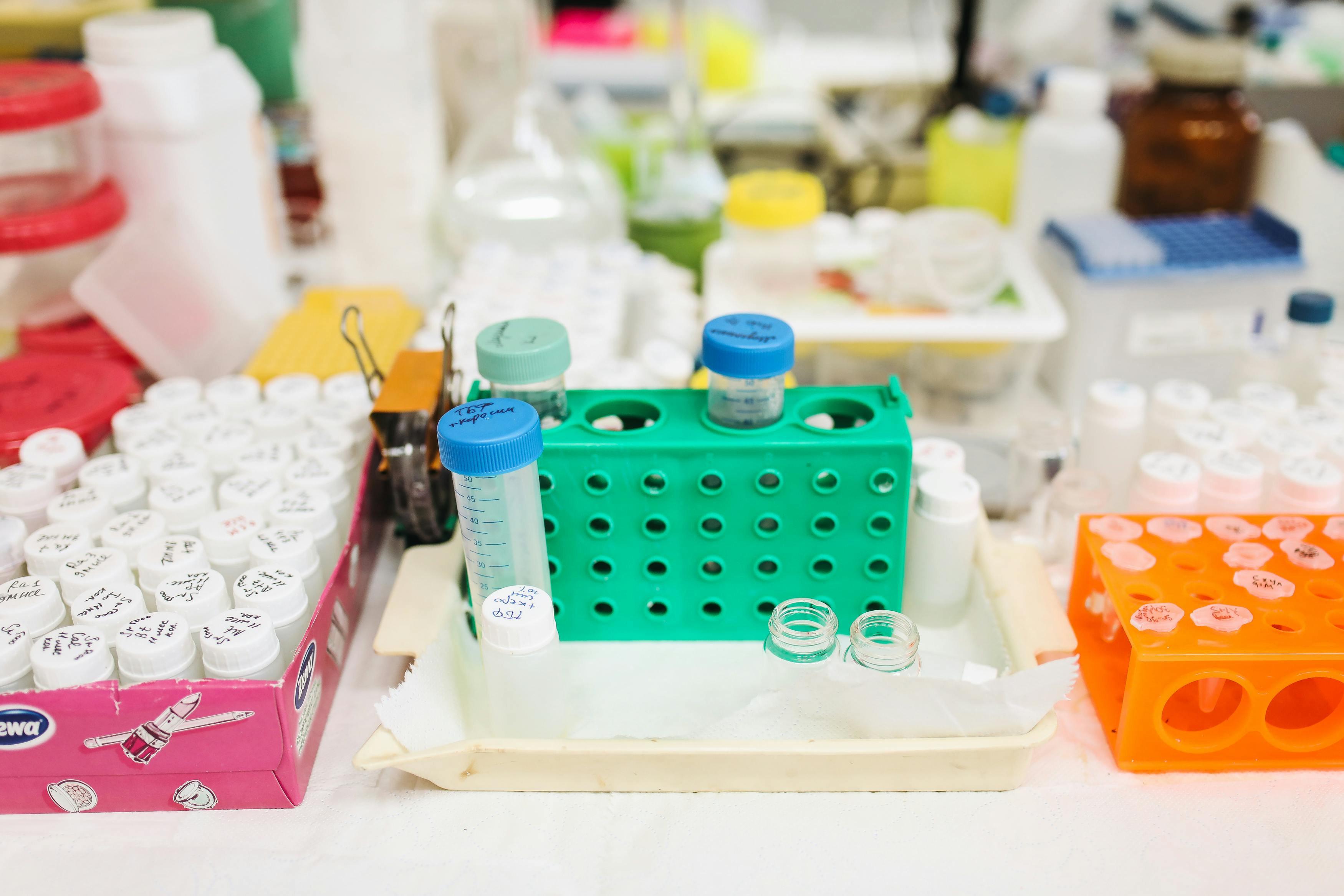
Have you ever wondered whether pre-existing practicals were adequately designed or even had to design entirely new lab practicals? If so, you probably applied one of two strategies: (i) Design the practicals from scratch, starting by defining learning outcomes, and then building the individual modules around them; (ii) adapt existing practicals, potentially even the ones you attended yourself as a student, and then just tweak them to fit the desired learning outcomes. In principle, there is nothing wrong with either of these approaches, provided the intended learning outcomes are sound and constructively aligned with them.
In contrast, Nicolaou and colleagues reasoned that they could take advantage of the collective wisdom of all or at least a large number of European universities. They systematically searched the curricula of 138 universities from 28 European countries to extract relevant topics and learning outcomes to design a standardized two-semester biology laboratory course (1). The risk of this exercise was to end up with a stale smallest common denominator, but the authors avoided this pitfall by not using the results mechanically. Instead, the laboratory modules and learning outcomes were defined with respect to the three categories "knowledge and understanding", "practical skills", and "transversal (transferable) skills" within the broader educational frameworks of Bloom's revised taxonomy of educational objectives (2), and the long-term educational goals laid out by both the AAAS and the European Commission (3).
The result is not some lofty dissertation on how to design a biology laboratory course, but a useful and concrete blueprint for how to do it. The authors propose a detailed curriculum for two-semester biology practicals, structured as 2 x 8 modules, and course-level learning outcomes. Most impressively, they even break down the learning objectives according to their three learning categories for each one of these 16 modules (4). This makes the paper not only interesting, but a great resource for educators revising or designing laboratory teaching.
A few limitations and questions are worth mentioning. Whereas a number of advantages of standardization are obvious (portability to other curricula and institutions; facilitated comparisons between programs; facilitated student mobility and faculty exchange), the "one size fits all" approach for all life/health sciences and their respective curricula is not questioned. The integration into a vast array of curricula, and adaptation to fit local needs and constraints may be challenging, even though the standardized laboratory course is undoubtedly modular and flexible. Indeed, flexibility also comes from the possibility to include virtual laboratories. These are valuable complementary teaching tools in their own right, but it must be critically investigated whether replacing "hands-on labs" with virtual ones, to compensate for time or financial constraints, compromises achieving some of the learning objectives. For FEBS, a federation reaching far beyond EU countries, it would be interesting to know whether the strategy presented here would have come to a different "standard", and whether the same standardized learning objectives would prevail across the large variety of different languages and cultures that make up our international learning landscape.
References:
- Nicolaou, S. A., Nicolaou, P., Dafli, E., Bamidis, P. D., Puig, B., and Lazar, G. (2026). Standardizing biology laboratory curriculum in health education: a blueprint for European undergraduate programs. Adv. Physiol. Educ. 50, 57–64. (open access; licensed under Creative Commons Attribution CC-BY-NC 4.0. Published by the American Physiological Society).
- Anderson, L. W. and Krathwohl, D. R., eds. (2001). A taxonomy for learning, teaching, and assessing: A revision of Bloom's taxonomy of educational objectives. New York: Longman. ISBN978-0-8013-1903-7.
- (i) Vision and Change: a Call to Action. American Association for the Advancement of Science, 2009; (ii) European Commission: European Education and Culture Executive Agency. (2020). The European higher education area in 2020 : Bologna process implementation report. Publications Office of the European Union. https://data.europa.eu/doi/10.2797/756192.; (iii) González, J. and Wagenaar, R. (2005). Tuning Educational Structures in Europe II: Universities’ Contribution to the Bologna Process. Universidad de Deusto (2005). ISBN 9788498300147.
- Nicolaou et al. (2026): Supplemental Material, https://doi.org/10.6084/m9.figshare.30353920 (freely accessible; licensed under Creative Commons Attribution CC-BY-NC 4.0. Published by the American Physiological Society).