What patient records can teach us about discovery

Attending a recent webinar organized by the Kenya Society of Haematology and Oncology (KESHO) on “From Data to Discovery: Leveraging Registries and Clinical Insights to Advance Research” made me reflect on something I had not previously considered deeply: the possibility that a significant part of medical research may already be embedded within routine clinical practice.
As a researcher in cancer biology and immunology, I have usually associated scientific discovery with laboratory-based experiments, molecular techniques, and structured clinical trials. Research, in my mind, often felt like something that happens after clinical data is collected and processed in a formal way. However, the discussion challenged this assumption and made me reconsider where research actually begins.
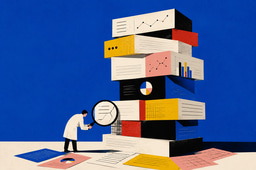
What stayed with me most was the realization that everyday clinical documentation is not just administrative work. It is a continuous record of patient journeys—symptoms, diagnoses, treatment decisions, and outcomes—that, when viewed collectively, can reveal meaningful patterns. This made me think differently about something I had previously taken for granted: the clinical record as a static document rather than a dynamic source of knowledge.
One of my key takeaways was the idea that a large amount of potentially valuable healthcare data remains underused. In many settings, this information exists in fragmented systems, paper files, or unstructured digital notes. While these records are essential for patient care, they are often not easily accessible for analysis or research purposes. Reflecting on this, I began to appreciate how much scientific potential might remain hidden simply because data are not organized in a research-ready format.
A simple example helped me internalize this idea. Consider a clinician documenting multiple cases of the same cancer type. Each patient record contains important clinical details relevant to individual care. However, when these records are considered together, they may reveal broader patterns—such as differences in treatment response, variations in disease presentation, or trends in outcomes over time. What struck me here is that the information needed to generate such insights already exists; what is missing is the ability to systematically connect and analyze it.
This naturally led me to think more about cancer registries and their role in structuring clinical information. My understanding of registries before was somewhat superficial, but I now see them as essential tools that bridge the gap between routine care and research. They transform scattered clinical information into organized datasets that can be used for surveillance, analysis, and evidence generation. This structured approach allows researchers to move from isolated observations to population-level insights.
Another reflection that stayed with me is how often research questions originate not from planned experiments, but from simple clinical observations. A clinician might notice that a disease appears to be affecting younger patients than expected, or that a particular treatment seems to produce different outcomes in similar cases. Initially, these are just impressions formed during routine practice. However, with proper data and structure, such observations can evolve into meaningful research questions.
This perspective made me rethink the role of routine clinical practice itself. Instead of seeing it as separate from research, I now see it as a continuous source of observations that can guide scientific inquiry. The boundary between “clinical work” and “research work” feels less rigid than I previously assumed.
At the same time, I also became more aware of the challenges involved in using routine clinical data effectively. One of the most important issues is data quality. Missing information, inconsistent documentation practices, and lack of standardization can significantly limit the usefulness of clinical records for research purposes. I realized that generating knowledge from clinical data is not only a technical challenge but also a cultural and organizational one.
Another important insight for me was the role of collaboration. Effective use of clinical data requires interaction between clinicians, researchers, and data specialists. Clinicians provide context and firsthand knowledge of patient care, while researchers contribute analytical and methodological expertise. Thinking about this, I realized that meaningful research is rarely an individual effort—it is usually the result of multiple perspectives working together.
I also found myself reflecting on the ethical dimension of using clinical data. Even when data have strong research potential, patient privacy and trust remain fundamental. Any attempt to use clinical records for research must be guided by ethical approval processes, proper de-identification, and responsible data governance. This balance between knowledge generation and ethical responsibility is essential for sustainable research practice.
Overall, this experience changed the way I think about clinical data. I no longer see patient records only as documentation tools, but also as potential starting points for discovery. Not every clinical record will lead to a research breakthrough, but the possibility exists when data are properly structured and thoughtfully analyzed.
For early-career researchers like myself, this perspective is particularly encouraging. It suggests that meaningful research does not always require immediate access to advanced technologies or large datasets. Sometimes, it begins with careful observation of routine clinical practice and the ability to ask the right questions from what is already available.
What I took away most strongly is the idea that discovery is not always separate from clinical work. In many cases, it is embedded within it—waiting to be recognized, structured, and explored.
Cancer Biology & Immunology Researcher | MSc. Cancer Biology, National Cancer Institute, Cairo University
Interdisciplinary researcher working at the intersection of cancer biology, cancer immunology, molecular biology, and multi-omics. My research interests focus on T-cell biology, tumor–immune interactions, tumor microenvironment, immune cell plasticity, and molecular mechanisms shaping cancer progression and therapeutic response.
I combine computational analysis, literature-based research, and hypothesis-driven approaches to investigate regulatory mechanisms in cancer and immunity, with a growing focus on integrating these approaches with experimental cancer research.
I am also engaged in Open Science, preprints, open-source research tools, and community peer review, with an interest in reproducible and accessible biomedical research.