Trust in scientific publishing cannot be taken for granted
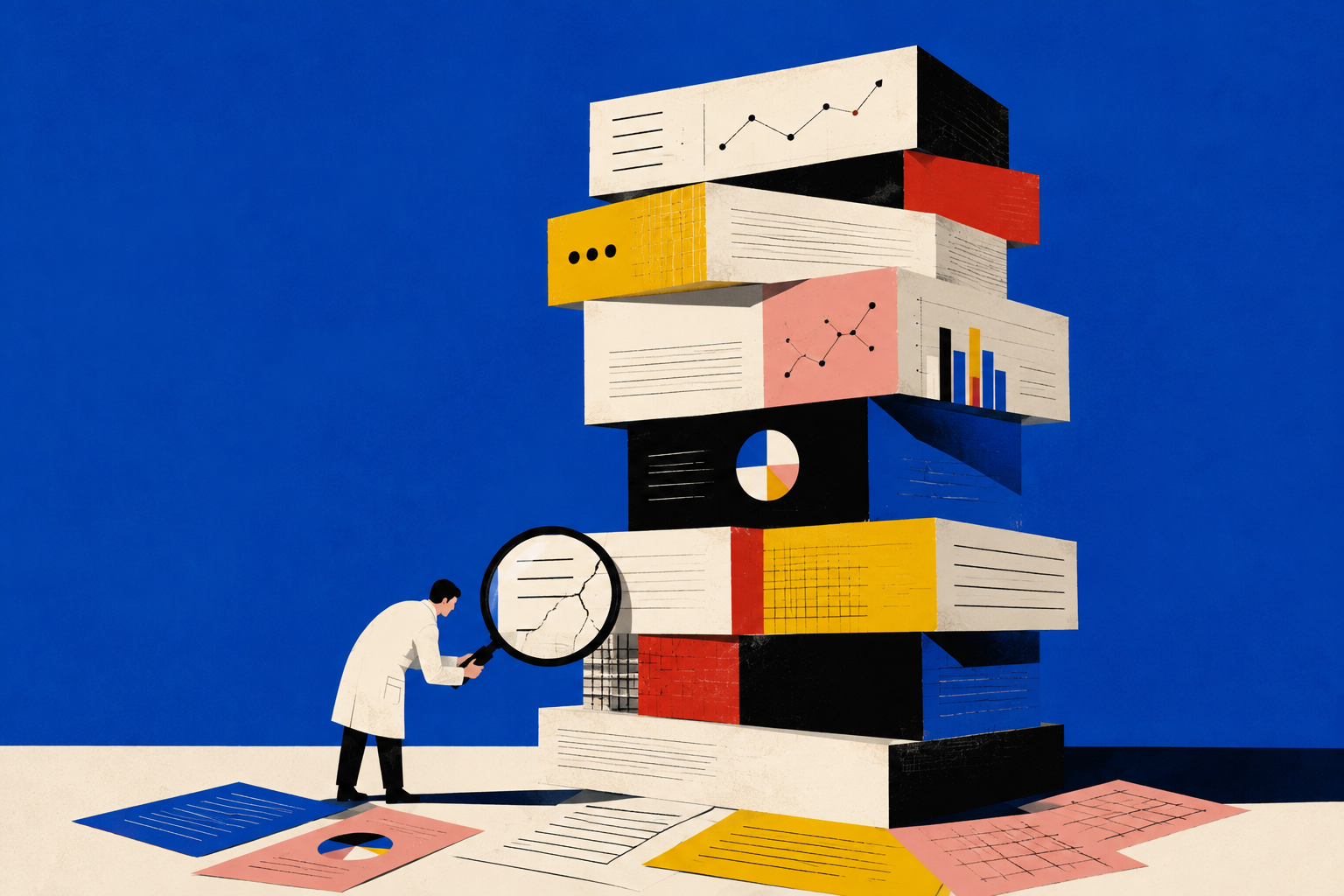
The scientific enterprise and scholarly publishing heavily rely on trust.
Researchers need to be able to trust the literature they build upon. Editors and reviewers need confidence that the work they assess has been conducted and reported responsibly. Institutions, funders and policymakers rely on published research to make decisions. And ultimately, society needs confidence that scientific knowledge has been subjected to meaningful scrutiny before it enters the scientific record.
None of this is new. What is changing is the environment in which scientific publishing operates.
The volume of research being produced is growing rapidly, while the ways in which we discover and consume scientific information are also changing. Researchers navigate an increasingly large body of literature, often under considerable time pressure. Search engines, aggregators and, increasingly, AI-assisted tools can surface scientific information faster than ever.
Greater access to knowledge is something to welcome, but access does not guarantee that the source of the information can be trusted.
Integrity comes first
Editors act as gatekeepers of quality by supervising key steps in the process. However, publication standards are not the same across all journals.
Was the work appropriately reviewed by experts in the field? Are the findings reproducible? Are the underlying data available? Have figures been checked for errors or manipulation? Are conflicts of interest declared? Are concerns investigated according to COPE guidelines when they arise?
These questions are part of the less visible infrastructure of scientific publishing. Much of this work happens behind the scenes, yet it is fundamental to maintaining confidence in the literature.
At FEBS Press, protecting the integrity of the scientific record is a responsibility we take seriously. Across our journals, this includes expert peer review, plagiarism screening, image integrity checks, data availability requirements, transparent peer review options and clear policies covering research and publication ethics. These processes continue to evolve as scientific publishing itself evolves.
Trust needs to be recognisable
One of the challenges we now face is how to make rigorous publishing practices more visible and easier to recognise.
As scientific output becomes larger and more complex, researchers need clearer signals about the standards behind the journals they read and publish in. Community-led initiatives can help develop a more consistent understanding of what trustworthy publishing looks like, by defining the criteria and encouraging scholarly journals to apply them.
The Trust Seal initiative, launched by BioCore, is one such effort. It is developing a community-led framework to recognize journals committed to integrity, transparency, and publishing ethics. FEBS recently joined as a Supporting Member, allowing FEBS Press to contribute its experience and perspective as the framework takes shape.
For us, participating is about contributing to a wider conversation on how professional publishing practices guaranteeing the integrity of the science reported can be made easier to identify and understand. Once the criteria and standards are defined, only the journals that meet the requirements will be awarded a Trust Seal.
This may become even more important as scientific literature is increasingly retrieved, summarized and interpreted through AI-driven tools. These technologies can dramatically accelerate access to knowledge, but speed does not remove the need to distinguish between sources of different quality and reliability. The Trust Seal will be included in the article metadata, allowing AI to discern trustable sources.
Trust in science ultimately depends on much more than journals. It begins with how research is conducted and extends through how it is reviewed, published, communicated, corrected and reused. No seal can replace critical judgement, but credible signals of trust can help researchers navigate an increasingly complex information landscape.
Our task is to ensure that the science we publish deserves the confidence of those who build upon it.
Acknowledgements: Many thanks to Teresa Sarria for her valuable assistance in drafting this piece.