Meet the FEBS Research Academy: In Conversation with Nektarios Tavernarakis

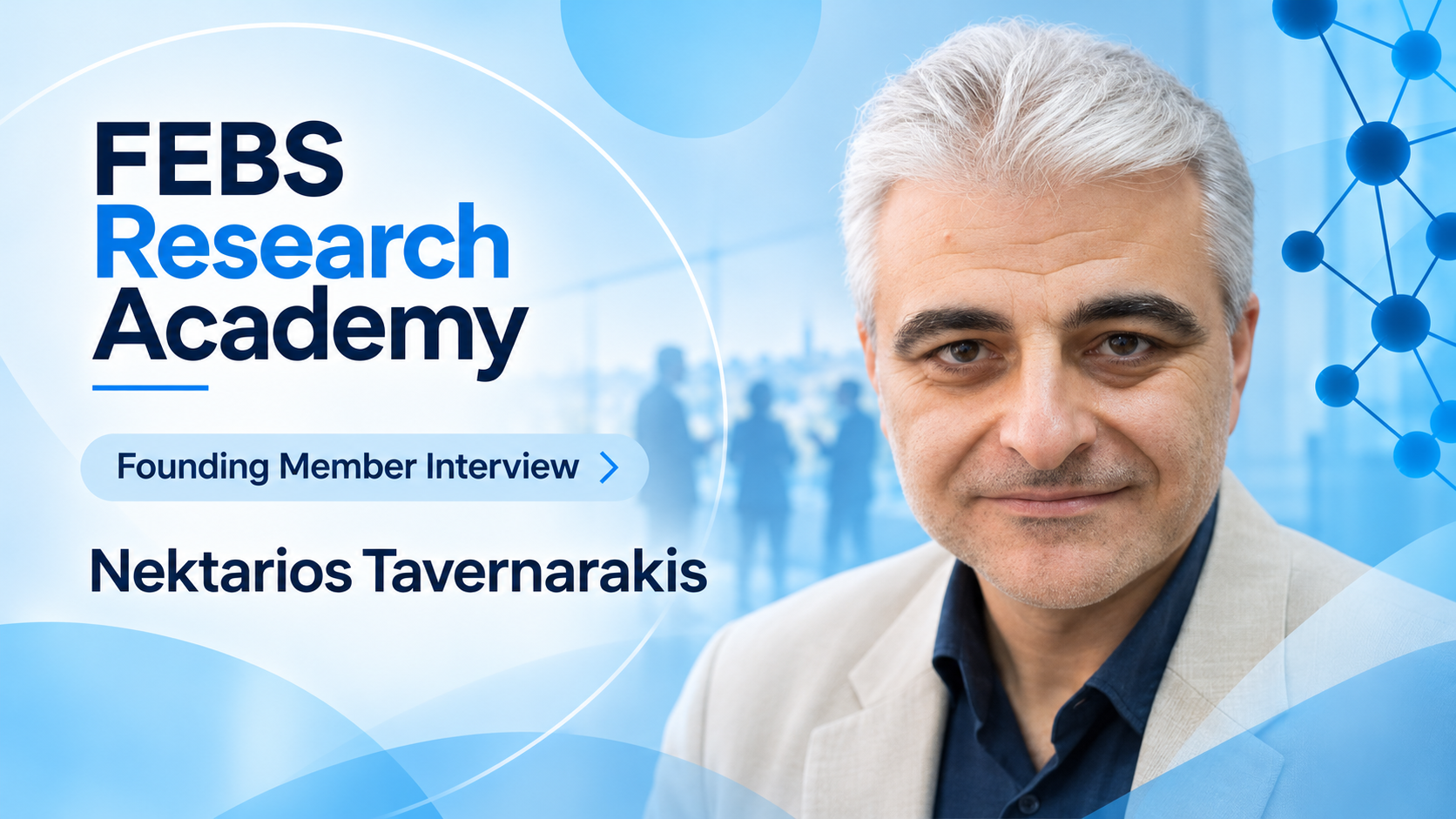
Nektarios Tavernarakis is Professor of Molecular Systems Biology at the Medical School of the University of Crete (Heraklion, Greece), and Research Director at the Institute of Molecular Biology and Biotechnology (IMBB) of the Foundation for Research and Technology-Hellas (FORTH).
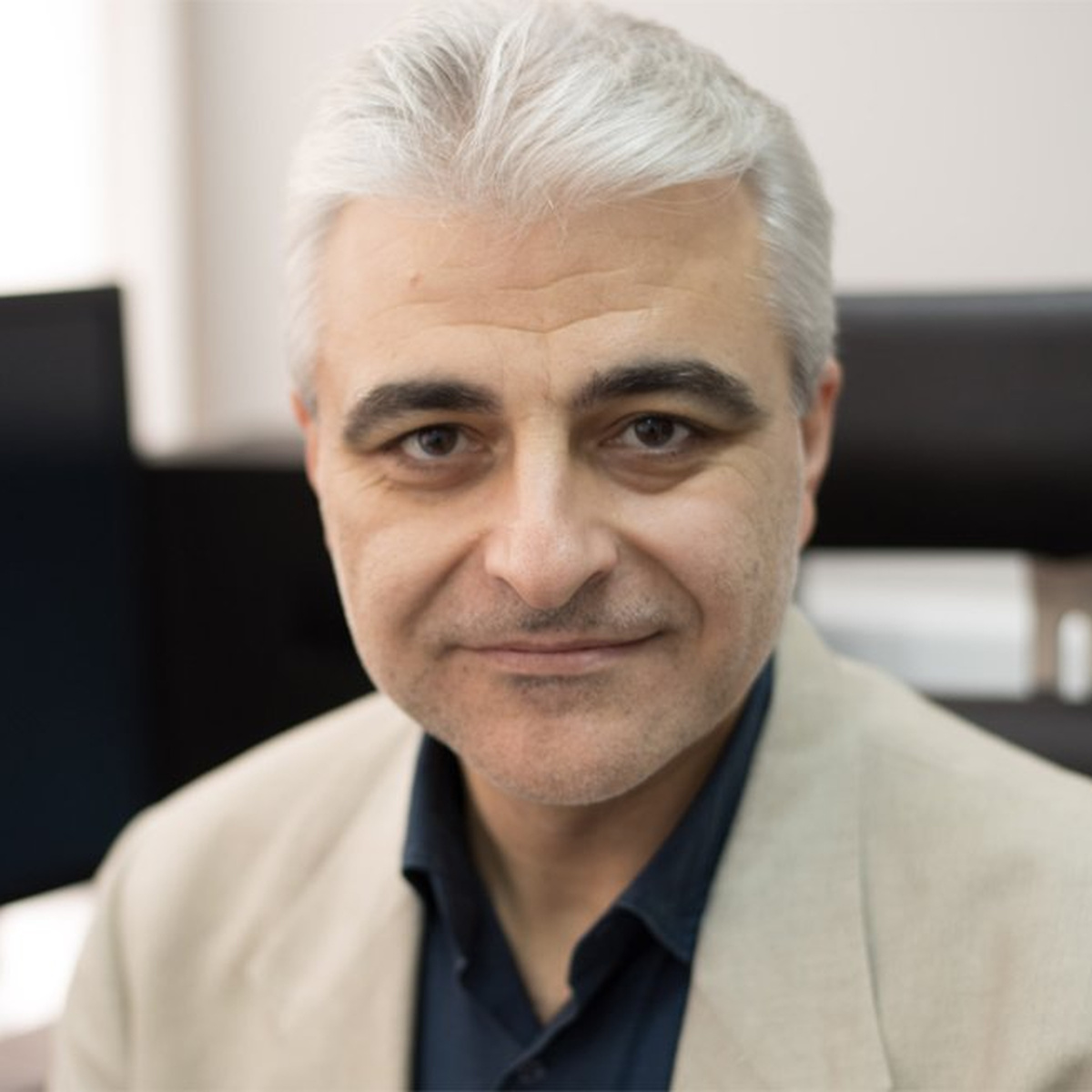
A Founding Full Member of the FEBS Research Academy, Professor Tavernarakis shares his perspectives on the current developments in the molecular life sciences, and on the FEBS Research Academy's potential to foster cross-disciplinary collaboration.
What scientific contribution are you most proud of, and why?
I would find it difficult to single out one contribution, because I have always viewed scientific progress as a cumulative process rather than a collection of isolated discoveries. If I had to identify a central theme, however, it would be our work on the molecular mechanisms that connect cellular homeostasis, metabolism and ageing, particularly the role of autophagy and mitochondrial quality control in maintaining neuronal function.
I am especially proud of having contributed to the recognition that ageing is not simply a passive accumulation of damage, but a process that is actively regulated by cellular pathways that can, at least in principle, be manipulated. Our studies have helped establish connections between autophagy, mitochondrial function, cellular stress responses and organismal longevity, including their relevance to neurodegeneration. I value this contribution because it went beyond examining individual cellular quality-control pathways and revealed how they are integrated into a broader regulatory system.
What makes this work particularly rewarding is that it illustrates the value of fundamental research. By using a relatively simple organism, such as the nematode worm Caenorhabditis elegans, scientists can uncover evolutionarily conserved biological principles with relevance to human health. A mechanistic observation made in a simple experimental model can eventually reshape how we think about much broader questions in human ageing and disease.
Looking back at your scientific career, which decisions or turning points most shaped the researcher you became?
My scientific trajectory was not entirely predetermined. Several turning points shaped me, but perhaps the most important was the decision to move across disciplines rather than remain within a single scientific niche. As a high-school student, I was initially more interested in physics and electrical and computer engineering. I was fascinated by electronics, and I still find it remarkable how biochemical pathways resemble intricate electronic circuits. Eventually, the complexity of living systems won me over and I chose Biology for my undergraduate studies. My doctoral training in molecular genetics provided a strong foundation in molecular biology, while my subsequent experience in neurobiology exposed me to the complexity of the nervous system. Bringing these perspectives together naturally led me towards questions at the interface of genetics, cell biology, ageing and neuroscience. Another important decision was to work with genetically tractable model organisms. This allowed us to approach questions about ageing and neurodegeneration experimentally and mechanistically, rather than limiting ourselves to descriptive observations.
I also benefited enormously from periods of working in different scientific environments and from interactions with researchers from disciplines outside my own. I was also exceptionally fortunate to have inspiring mentors, whose influence on my scientific development was immense. Each of them broadened my scientific perspective and strengthened my conviction that curiosity and intellectual independence should guide research. These experiences taught me that scientific identity should not become a boundary. The willingness to change direction, learn unfamiliar approaches and follow an interesting question wherever it leads has probably shaped me more than any individual career decision.
Can you tell us about an unexpected result that you encountered in your research that proved worth pursuing? What helped you decide to investigate it further?
Some of the most interesting discoveries in biology begin as results that initially seem inconvenient or difficult to explain. In our studies of cellular quality-control pathways, we encountered observations suggesting that autophagy was doing considerably more than simply removing damaged cellular material. In particular, the relationships we observed between selective autophagy, mitochondrial homeostasis and ageing suggested that these pathways were actively coordinating cellular adaptation rather than merely responding to damage.
Another particularly rewarding example emerged from our investigation of the molecular mechanisms underlying heat-induced neuronal damage. We developed a C. elegans model of heat stroke and, while investigating protective mechanisms against heat-induced necrotic cell death, discovered that pre-emptive activation of the cellular heat-shock response provided remarkably strong protection. What made this finding rather unexpected was that the protective mechanism converged on the Golgi apparatus, preserving its function as an intracellular calcium-storage and homeostasis compartment. This was the first direct implication of the Golgi apparatus in regulating necrotic cell death. Even more intriguingly, the protective effect extended beyond heat exposure: it also suppressed neuronal necrosis associated with other insults, including hypoxia, excitotoxicity and protein aggregation.
We decided to follow this observation because it suggested a previously unappreciated role for an endogenous stress-response pathway. The possibility that a conserved cellular defence mechanism could protect neurons against multiple forms of injury was compelling - the decision to pursue this direction came from asking whether the result could provide an explanation for a broader biological phenomenon. We were not satisfied with treating it as an isolated experimental effect. We wanted to know whether there was a mechanism behind it, whether it was conserved, and whether manipulating the pathway altered ageing or neuronal function.
I have learned to regard unexpected results as invitations to ask better questions. They require scepticism and rigorous validation, but they can also reveal biology that we would never have thought to investigate if we had simply followed our original hypothesis.
Which scientific questions or emerging areas do you think deserve considerably more attention than they currently receive?
I believe we need to pay considerably more attention to the problem of cellular and organismal resilience: how cells and organisms preserve functional integrity and homeostasis over years and decades despite continuous molecular and environmental stress. We understand many individual components of cellular quality control, but we still have a surprisingly incomplete picture of how these systems operate together over the lifetime of an organism. Indeed, the roles of mitochondria, the endoplasmic reticulum and the nucleus, together with the organelle-specific quality-control pathways that maintain them, remain incompletely understood.
This is particularly important for long-lived, post-mitotic cells such as neurons. How do mitochondria, lysosomes, the endoplasmic reticulum, the nucleus and the cytoskeleton collectively maintain homeostasis for decades? What determines when compensatory mechanisms fail, and can that transition be delayed? I am also intrigued by the progressive deterioration of nuclear architecture during ageing, including changes in nucleolar organization, and whether these alterations are merely consequences of ageing or actively contribute to functional decline.
Another fundamental question concerns the striking dichotomy between somatic ageing and germline immortality. How does the germline preserve cellular integrity and genetic information across generations, while somatic tissues progressively deteriorate? Understanding this distinction could reveal fundamental principles governing longevity, stem-cell maintenance and tissue homeostasis. More broadly, I think the field should move beyond studying ageing as a collection of molecular hallmarks and concentrate increasingly on the causal relationships and interactions among them.
Are there areas where technological progress is currently moving faster than our ability to understand its implications?
Certainly. Artificial intelligence is the most obvious example, but I would place it within a broader category of technologies that dramatically expand our ability to generate, analyse and manipulate biological information. We can now obtain enormous amounts of genomic, transcriptomic, proteomic and imaging data, and AI can identify patterns within these datasets at a scale that would previously have been impossible.
The challenge is that pattern recognition is not the same as biological understanding. Our ability to generate information is advancing faster than our capacity to extract genuine biological understanding from it. A computational system can identify a highly predictive association without revealing its causal basis. Sophisticated computational predictions do not necessarily establish causality. In biology, where context, cellular state and temporal dynamics are fundamental, this distinction is particularly important. Mapping a genome, for example, is fundamentally different from understanding its functional organization.
The same issue applies to increasingly powerful technologies for genome editing, synthetic biology and cellular engineering. Our technical capacity is advancing extremely rapidly, whereas our ability to anticipate long-term biological, ethical and societal consequences is inevitably slower.
There is also an important ethical dimension. Powerful technologies in the life sciences raise questions about responsible use, dual-use applications and long-term societal consequences. Technological innovation must therefore be accompanied by rigorous biological reasoning, reproducibility, critical evaluation and ethical reflection. Ultimately, technology should empower us to ask and answer important scientific questions, rather than dictate the direction of research or substitute for fundamental understanding.
What do you hope the next generation of scientists will do differently from your generation?
I hope the next generation will be more intellectually adventurous and comfortable crossing disciplinary boundaries. The most important biological problems increasingly lie between established fields, rather than neatly within them. Molecular and cell biologists increasingly need to engage with physics, mathematics, engineering, computational science and medicine. Deep expertise remains essential, but intellectual isolation is becoming a serious limitation.
I also hope young scientists will place greater value on asking important questions rather than simply producing more data. The availability of increasingly sophisticated technologies creates a temptation to let methodology drive research; to pursue what is technically possible rather than what is scientifically important. I encourage young scientists to put biological questions before experimental techniques. A compelling question should drive the choice of methodology, not the other way around.
Perhaps most importantly, I hope the next generation will preserve the curiosity and independence that make science possible. Academic careers inevitably involve competition and pressure, but science is ultimately a collective enterprise. Generosity towards colleagues, openness to unexpected results, willingness to share ideas and respect for evidence are not secondary virtues; they are fundamental to scientific progress.
Transformative discoveries often emerge from unexpected observations and investigations that initially appear to have little practical relevance. Protecting the freedom to pursue such questions is essential for the future of science. If we can combine technological fluency with intellectual curiosity and scientific integrity, the future of biology is exceptionally promising.
If the FEBS Research Academy could make a meaningful contribution in one area during its first few years, where do you think it could have the greatest impact?
I would place the greatest emphasis on creating a genuinely international and interdisciplinary network for early- and mid-career scientists. The Academy has an opportunity to do more than provide training: it can create lasting scientific relationships and collaborations, across countries, disciplines and generations, that might otherwise never emerge.
Some of the most valuable scientific interactions occur when researchers encounter colleagues who approach similar biological problems from entirely different perspectives. The Academy could facilitate these encounters by bringing together young investigators from molecular and cellular biology, biophysics, neuroscience, computational science and other disciplines, encouraging them to exchange ideas and develop collaborations around important scientific questions. The Academy could deliberately create environments where these interactions occur and where young scientists feel empowered to approach colleagues outside their immediate field.
I would particularly value sustained mentoring initiatives, opportunities for cross-disciplinary exchange, and a network that remains active well beyond the Academy's individual activities. It is important that young scientists develop not only technical expertise but also intellectual independence, confidence and an appreciation of the wider scientific landscape.
Ultimately, the Academy's lasting contribution could be to nurture a generation of researchers who are intellectually curious, internationally minded and committed to collaborative, curiosity-driven science. That would be an investment whose benefits extend far beyond individual programmes the Academy establishes during its first years.