Lost in the data forest?

Modern biology generates data at an unprecedented pace. Omics technologies, advanced imaging, clinical datasets and human samples are producing increasingly complex layers of information. Yet our ability to integrate these data, translate them into mechanistic insight and understand their implications for the whole organism has not kept pace. Are we getting lost in the data forest?
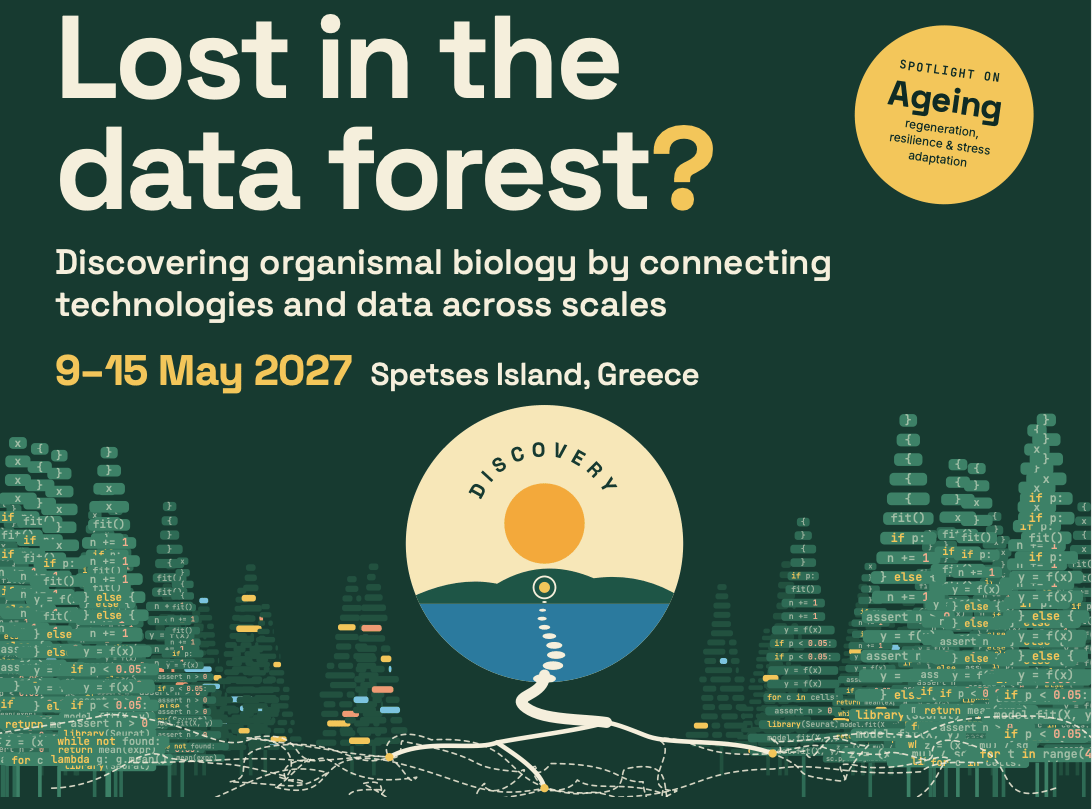
This is the central question of our 2027 FEBS Advanced Lecture Course 'Lost in the data forest? Discovering organismal biology by connecting technologies and data across scales', and we invite you to join us on the beautiful Greek island of Spetses to explore how we can find our way forward - together. The course will take place from 9 to 15 May 2027 (arrival evening 9 May; departure morning 15 May) at the AKSS conference site and Hotel Spetses on Spetses Island, Greece.
The course will explore how data generated by diverse experimental and computational technologies can be integrated with classical, hypothesis-driven research to uncover molecular mechanisms and understand their relevance to physiology and disease. By connecting insights across biological scales – from molecules and cells to tissues, organs and the whole organism – we aim to move beyond data collection towards a deeper understanding of biological complexity.
Scientific programme
The scientific programme will span from data integration to organismal understanding. Over five immersive days, leading experimental and computational scientists will guide participants through a broad range of cutting-edge approaches and biological questions.
Topics will include:
Technologies and analytical approaches: single-cell transcriptomics, proteomics and metabolomics; imaging across biological scales; computational analysis and machine learning for multi-omic datasets; and the integration of human and translational data.
Fundamental biological processes: ageing, regeneration, resilience and stress adaptation.
Communication across organs and systems: the kidney–heart–lung–brain axis, the brain–body axis and the gut–brain highway.
Interconnected biological networks: host–microbiome interactions, neuro-immune communication and immune–metabolome interactions, as well as signals originating from bone, blood, adipose tissue and liver.
Insights across model systems and human biology: research in mouse, Drosophila, zebrafish and killifish, connected to findings from human studies.
At the heart of the course is a central ambition: to equip participants with the conceptual frameworks and practical strategies needed to integrate data across technologies and biological scales, identify meaningful connections and extract mechanistic insight from increasingly complex datasets.
Ultimately, the goal is not simply to generate or analyse more data, but to ask better biological questions - and use the power of interdisciplinary research to understand the organism as a whole.
Organizers
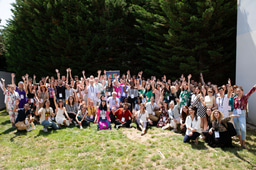
The course is organized by Andreas Herrlich (Washington University in St. Louis, USA), François Leulier (CNRS / Institut de Génomique Fonctionnelle de Lyon, ENS de Lyon, France; EMBO member) and Helen Morrison (Leibniz Institute on Aging – Fritz Lipmann Institute, Jena, Germany), who together have organized three previous Joint FEBS/EMBO Advanced Lecture Courses on Spetses and bring a well-established, interactive 'summer school' format. (Read an overview of the 2024 joint course on this post.)
Speakers
The confirmed faculty ( over 50% women) includes:
- Michael Karin (UC San Diego; fat–liver axis, inflammation and cancer metabolism),
- Nina Cabezas-Wallscheid (ETH Zürich; EMBO Lecture on hematopoietic stem cell dormancy and ageing),
- Sara Sdelci (CRG Barcelona; EMBO Young Investigator Lecture on the epigenetic face of cancer metabolism),
- Thomas Braun (MPI for Heart and Lung Research, Bad Nauheim; muscle stem cells, metabolism and ageing),
- Heinrich Jasper (Genentech; stem cells and ageing, from flies to bedside),
- Maria Ermolaeva (FLI Jena; stress tolerance, homeostasis and the microbiome in ageing),
- Melike Donertas (METU Ankara; computational biology of ageing and machine learning on multi-omic data, IUBMB Speaker), Ilana Gabanyi (Gulbenkian Institute; microbiota-gut–brain axis),
- Miguel Soares (EMBO member, Gulbenkian Institute; systemic inflammation and immunity),
- Nicolas Venteclef (Institut Necker Enfants Malade, Paris; immunity and metabolism of diabetes),
- Kerstin Wilhelm-Jüngling (University of Bonn; vascular biology of adipose tissue, endothelial heterogeneity, whole-organ imaging),
- Ines Thiele (University of Galway; molecular systems physiology, computational modeling, neurodegenerative diseases),
- Helen Morrison (Leibniz Institute on Ageing - Fritz Lipmann Institute, EMBO Women in Science Lecture: "Power hour — negotiating a career in science"; peripheral nerve biology),
- Francois Leulier (EMBO member, CNRS Lyon; microbiome and growth regulation),
- Andreas Herrlich (Washington University in St. Louis; kidney-lung-heart-brain axis).
Format and atmosphere
Expect five talks per day (45 min + discussion), two poster sessions with prizes, two small-group tutorials (scientific discussion plus career development and mentoring), talks selected from abstracts, "Dine with the PI" dinners, a welcome reception, an afternoon excursion and a closing Greek barbecue. With a faculty-to-trainee ratio of about 1:6, interaction is built into every day.
Who should apply?
PhD students, postdocs and junior investigators (within 5 years of PhD) from experimental, quantitative and computational backgrounds, selected on background, training level and a support letter from their home laboratory. We aim for gender balance and broad geographic diversity, and we have registration grants available. The all-inclusive registration fee (5 days, 6 nights, all meals, accommodation) is €850.
How to apply?
We will share the course website on this post and on the FEBS Advanced Courses calendar as soon as possible, open for registrations. Applications will be open until 1 March 2027. Mark your calendar, sharpen your questions about multi-scale data integration — and come find your way out of the data forest with us on Spetses Island!
Please share this post with interested contacts and relevant networks. Thank you!
Images provided by the course organizers.