Journal club on malaria study published in FEBS Letters - A Junior Ambassador activity


The event took place at the Cambridge Institute for Medical Research (University of Cambridge, UK), where Vitória was serving as a Visiting Researcher. The session, hosted in collaboration with Professor Julian Rayner’s group, gathered early-career and senior researchers to critically analyse an impactful malaria study recently published in FEBS Letters: “Plasmodium falciparum gametogenesis essential protein 1 (GEP1) is a transmission-blocking target”.
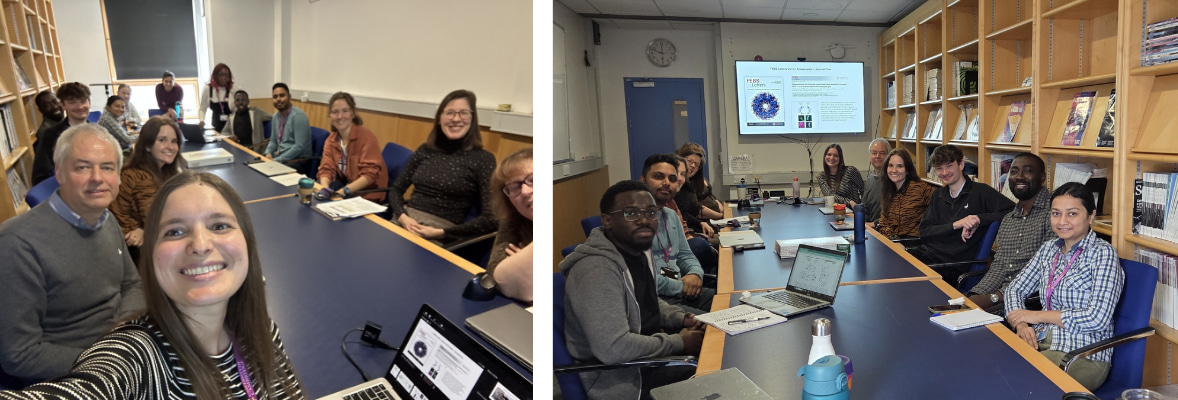
Group photo of the journal club participants. Photo credits: personal archive
The discussion highlighted the global significance of malaria research and the urgent need for new therapeutic strategies:
“Malaria threatens half of the world population every year, and the parasite has a unique ability to develop resistance to most antimalarial drugs introduced. As such, identifying new critical targets for disease control is of utmost importance”, - said one of the journal club participants.
The study explores the role of GEP1 in the parasite journey from a human host to a mosquito vector, a process known as gametogenesis, a crucial stage in malaria transmission. Reflecting on the findings, one participant noted:
“by showing the important role of GEP1 for parasite transmission, the authors identify a promising new candidate for transmission-blocking interventions”.
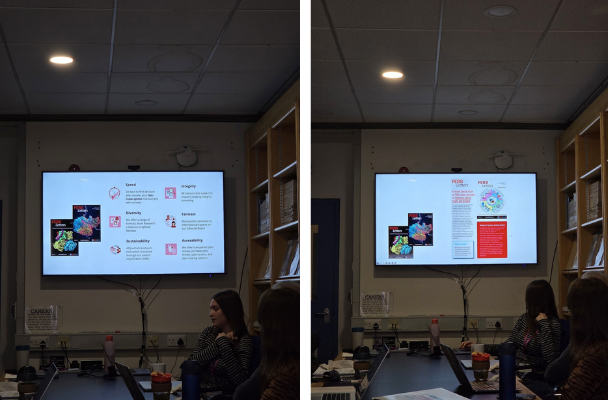
Dr. Vitória Baptista introducing FEBS Letters during the journal club. Credits: Personal archive
The event provided a rigorous environment for scientific exchange, encouraging participants to critically assess experimental design and debate findings while stimulating conversations around innovative methodologies that could be applied to their own research projects.
Additionally, Vitória introduced the FEBS Junior Section and FEBS Letters, underlining its rapid peer-review system and its non-profit structure supporting scientific initiatives.
About FEBS Letters
FEBS Letters is a leading journal for the rapid publication of high-quality research in the molecular biosciences. As a non-profit journal published on behalf of the Federation of European Biochemical Societies, its proceeds directly fund fellowships, travel grants and educational programs for the global scientific community.